
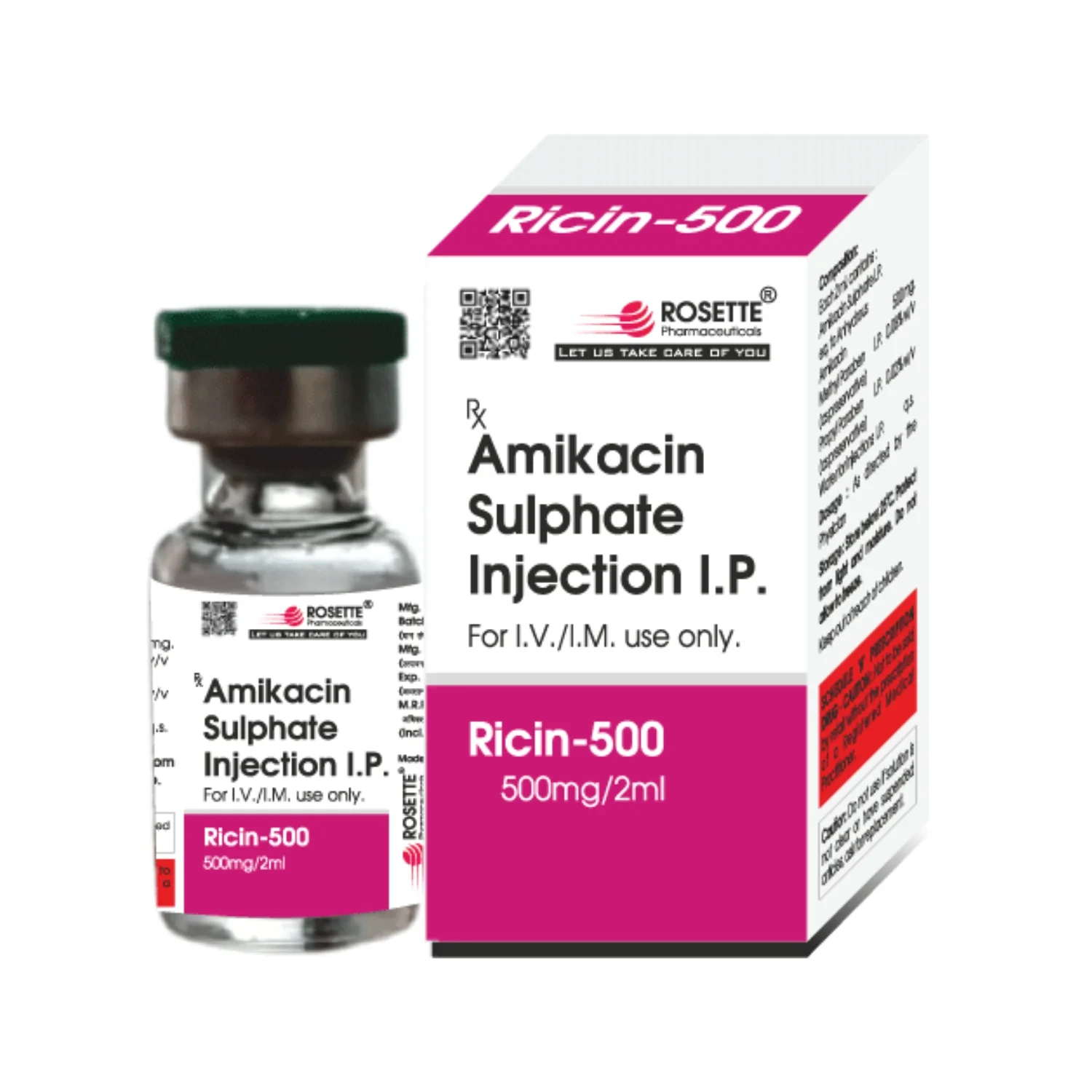
Ricin 500 contains Amikacin Sulphate 500mg injection, a high-strength aminoglycoside antibiotic used to help manage severe and complicated bacterial infections. It is commonly prescribed in hospital settings for infections that may not respond to first-line antibiotics. This injection is effective against a wide range of bacteria, particularly gram-negative organisms.
Due to its potency, careful dosing and monitoring are required to minimize risks related to kidney function and hearing. Ricin 500 is administered by a healthcare professional, ensuring accurate dosing based on body weight and infection severity, and is used under strict medical supervision for safe and effective treatment.
Composition
| Ingredient | Strength | Purpose |
| Amikacin Sulphate | 500 mg | Supports bacterial balance under medical supervision |
How Does Amikacin Sulphate 500mg injection Work?
- Amikacin is administered directly into the bloodstream via injection.
- It targets bacterial cells and binds to their ribosomes.
- Inhibits protein synthesis required for bacterial survival.
- Produces defective proteins within bacteria.
- Disrupts bacterial cell function.
- Leads to bacterial cell death and helps control infection.
Key Benefits of Amikacin Sulphate 500mg injection
- Helps manage severe and complicated bacterial infections.
- Effective against resistant gram-negative bacteria.
- High-strength dose suitable for serious infections.
- Rapid action due to injectable form.
- Supports infection control in critical care settings.
- Helps reduce bacterial growth and spread under medical supervision.
Amikacin Sulphate 500mg injection Uses & Indications
- Severe bacterial infections.
- Hospital-acquired infections.
- Respiratory tract infections.
- Complicated urinary tract infections (UTIs).
- Bloodstream infections (septicemia).
- Intra-abdominal infections.
- Bone and joint infections.
- Skin and soft tissue infections.
- Infections caused by resistant bacteria (as prescribed).
Dosage & Administration
| Parameter | Details |
|---|---|
| Usual Dose | As prescribed by doctor (based on body weight, severity, and kidney function) |
| Route | Intramuscular (IM) or Intravenous (IV) injection |
| Frequency | Usually once daily or divided doses as advised |
| Administration | Must be administered by a healthcare professional |
| With/Without Food | Not applicable (injectable form) |
| Duration | Depends on infection type and clinical response |
| Monitoring | Kidney function and drug levels may be monitored |
| Missed Dose | Consult doctor; do not self-administer |
| Overdose | Seek immediate medical attention (risk of toxicity) |
Warnings & Precautions
- Use only under strict medical supervision.
- Should be administered by a qualified healthcare professional.
- Monitor kidney function regularly (risk of nephrotoxicity).
- May cause hearing or balance issues (ototoxicity); report symptoms immediately.
- Dose adjustment required in patients with kidney impairment.
- Use cautiously in elderly patients and critically ill individuals.
- Avoid concurrent use with other nephrotoxic or ototoxic drugs unless prescribed.
- Not recommended during pregnancy unless clearly advised by a doctor.
- Ensure adequate hydration during treatment.
- Complete full prescribed course to reduce risk of resistance.
FAQs
Q1: What is Amikacin Sulphate 500mg injection used for?
Ans: It is used to manage severe bacterial infections, especially in hospital settings under medical supervision.
Q2: Is amikacin a strong antibiotic?
Ans: Yes, it is a potent antibiotic used for serious or resistant infections.
Q3: How many times a day is amikacin given?
Ans: It is usually given once daily or in divided doses as prescribed by a doctor.
Q4: How fast does amikacin injection work?
Ans: It starts working after administration, but symptom improvement may take a few days.
Q5: What are the major side effects of amikacin?
Ans: Possible side effects include kidney issues, hearing changes, and injection site reactions.
Q6: Can amikacin damage kidneys?
Yes, it may affect kidney function, so regular monitoring is required.
Q7: Why is amikacin considered a restricted antibiotic?
Ans: It is used carefully due to potential side effects and to prevent antibiotic resistance.
Q8: Is amikacin a high-risk medication?
Ans: It requires careful monitoring, especially for kidney and hearing-related effects.
Q9: How is Amikacin 500mg injection administered?
Ans: It is given as an intramuscular or intravenous injection by a healthcare professional.
Q10: Why is amikacin given slowly?
Ans: Slow administration helps reduce the risk of side effects and ensures safe drug levels in the body.

Reviews
There are no reviews yet.