
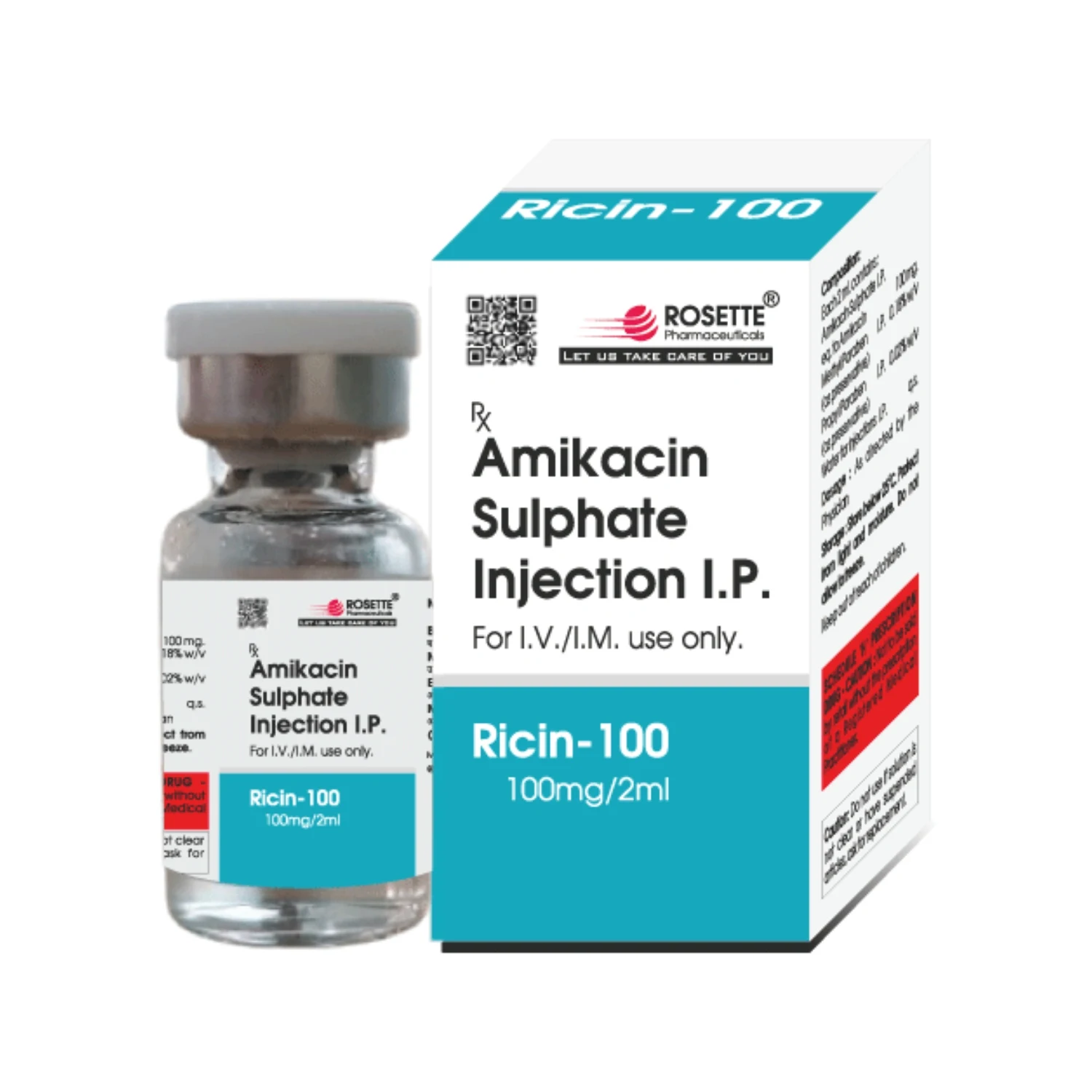
Ricin-100 contains Amikacin Sulphate 100mg injection, an aminoglycoside antibiotic used to help manage serious bacterial infections. It works against a wide range of bacteria, especially those resistant to other antibiotics. This injection is commonly prescribed for infections affecting the lungs, urinary tract, bloodstream, and abdomen.
Due to its potent action, it is typically used in hospital settings or under strict medical supervision. Ricin-100 should be administered by a healthcare professional to ensure correct dosage and to monitor for any potential side effects, especially related to kidney function and hearing.
Composition
| Ingredient | Strength | Purpose |
| Amikacin Sulphate | 100 mg | Supports bacterial balance under medical supervision |
How Does Amikacin Sulphate 100mg injection Work?
- Amikacin enters the bloodstream through injection.
- It binds to bacterial ribosomes (protein-making machinery).
- Blocks protein synthesis required for bacterial growth.
- Produces faulty proteins inside bacterial cells.
- Leads to bacterial cell damage and death.
- Helps control and manage the spread of infection.
Key Benefits of Amikacin Sulphate 100mg injection
- Helps manage serious bacterial infections.
- Effective against resistant bacterial strains.
- Works quickly through injectable form.
- Useful in hospital and critical care settings.
- Supports infection control in multiple body systems.
- Helps reduce bacterial growth and spread.
Amikacin Sulphate 100mg injection Uses & Indications
- Severe bacterial infections.
- Respiratory tract infections (lungs).
- Urinary tract infections (UTIs).
- Bloodstream infections (septicemia).
- Intra-abdominal infections.
- Skin and soft tissue infections.
- Bone and joint infections.
- Hospital-acquired infections (as prescribed).
Dosage & Administration
| Parameter | Details |
|---|---|
| Usual Dose | As prescribed by doctor (based on body weight & severity) |
| Route | Intramuscular (IM) or Intravenous (IV) injection |
| Frequency | Usually once or twice daily (as advised) |
| Administration | Must be given by a healthcare professional |
| With/Without Food | Not applicable (injectable) |
| Duration | Depends on infection type and response |
| Missed Dose | Consult doctor; do not self-administer |
| Overdose | Seek immediate medical attention (risk of toxicity) |
Warnings & Precautions
- Use only under medical supervision.
- Should be administered by a qualified healthcare professional.
- Monitor kidney function during treatment (risk of nephrotoxicity).
- May affect hearing or balance (ototoxicity); report any hearing changes.
- Use cautiously in elderly patients.
- Dose adjustment may be required in kidney impairment.
- Inform doctor about all ongoing medications (especially other antibiotics or diuretics).
- Not recommended during pregnancy unless clearly prescribed.
- Complete the full course as advised to avoid resistance.
FAQs
Q1: What is Amikacin Sulphate 100mg injection used for?
Ans: It is used to manage serious bacterial infections in different parts of the body under medical supervision.
Q2: What type of infections does amikacin treat?
Ans: It is used for respiratory, urinary tract, bloodstream, and abdominal infections.
Q3: Is amikacin a strong antibiotic?
Ans: Yes, it is a potent antibiotic generally used for severe or resistant infections.
Q4: How fast does amikacin injection work?
Ans: It starts working after administration, but noticeable improvement may take a few days.
Q5: How many days should amikacin be taken?
Ans: Duration depends on infection severity and doctor’s prescription.
Q6: Why is amikacin given once daily?
Ans: Once-daily dosing helps maintain effective drug levels and reduces toxicity risk.
Q7: Can amikacin affect the kidneys?
Ans: Yes, it may affect kidney function, so monitoring is required during treatment.
Q8: What are the side effects of amikacin injection?
Ans: Possible side effects include kidney issues, hearing changes, and injection site reactions.
Q9: What should I avoid while taking amikacin?
Ans: Avoid other nephrotoxic drugs unless prescribed and inform your doctor about all medications.
Q10: Is amikacin a painkiller?
Ans: No, it is an antibiotic used to manage bacterial infections, not pain relief.

Reviews
There are no reviews yet.