
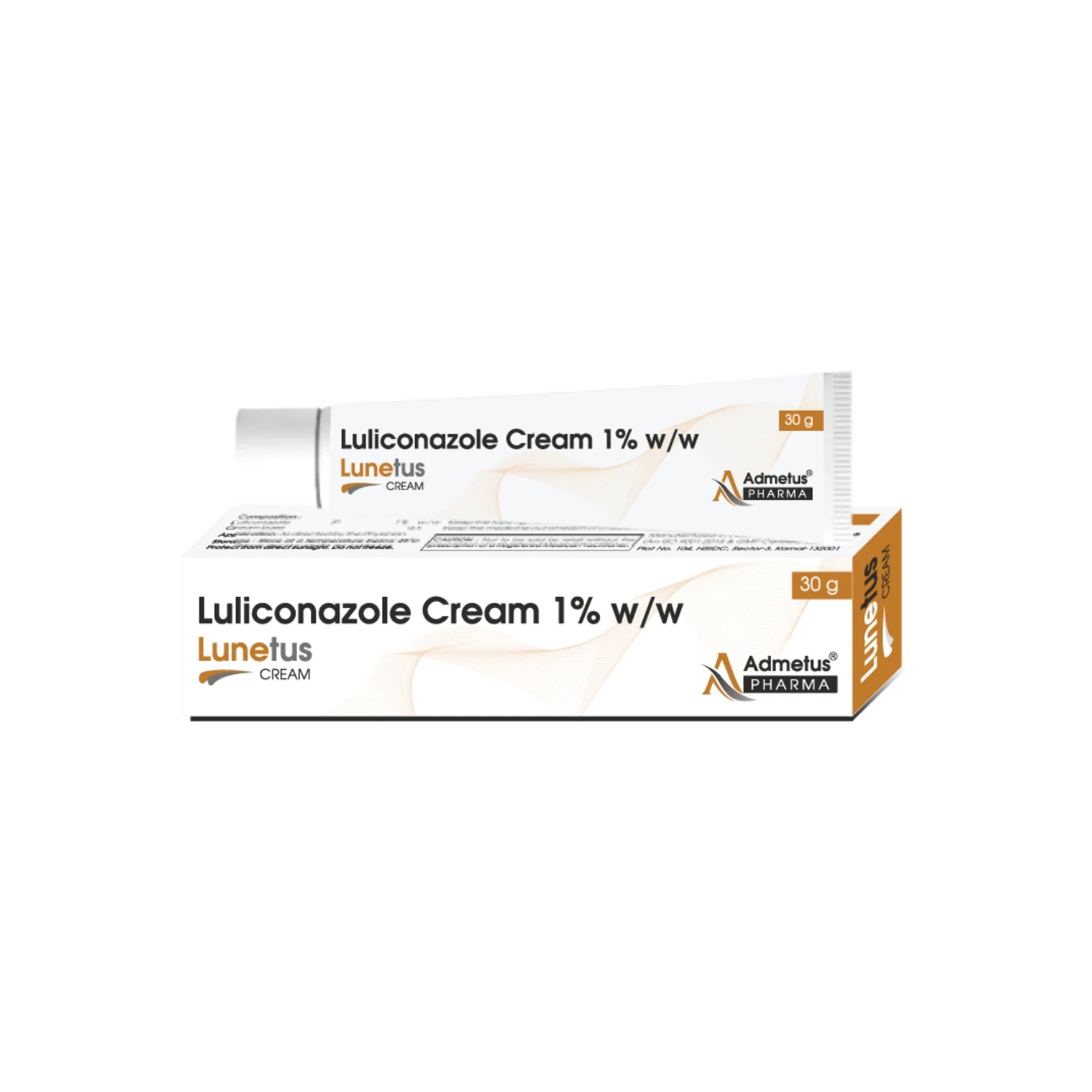
Lunetus is a Luliconazole 1% w/w topical formulation used for the management of fungal skin infections. Luliconazole is an antifungal agent that works by inhibiting the growth of fungi responsible for conditions such as ringworm, athlete’s foot, and jock itch. It helps reduce symptoms like itching, redness, scaling, and irritation on the affected skin.
This formulation is designed for external application and should be used as directed by a healthcare professional. Regular and proper use helps improve skin condition and supports effective control of fungal infections. Lunetus is intended for topical use only.
Composition
| Ingredient | Strength | Purpose |
| Luliconazole | 1% w/w | Supports skin hygiene and balance |
How Does Luliconazole Cream Work?
- Step 1: After application, the cream spreads over the affected skin area.
- Step 2: Luliconazole penetrates the outer layers of the skin where fungal infection is present.
- Step 3: It inhibits the production of ergosterol, an essential component of the fungal cell membrane.
- Step 4: This disruption weakens the fungal cell structure and prevents its growth and multiplication.
- Step 5: As fungal growth is controlled, symptoms like itching, redness, and irritation gradually improve.
Key Benefits of Luliconazole Cream
- Effective antifungal action: Helps control the growth of fungi responsible for common skin infections.
- Relieves itching and irritation: Helps reduce discomfort such as itching, redness, and burning sensation.
- Targets common fungal infections: Useful in conditions like ringworm, athlete’s foot, and jock itch.
- Supports skin recovery: Helps improve the condition of affected skin with regular use.
- Easy topical application: Designed for external use, allowing direct application on the affected area.
- Well-tolerated formulation: Generally suitable for use when applied as directed by a healthcare professional.
Luliconazole Cream Uses & Indications
- Ringworm (Tinea corporis): Commonly used to help manage fungal infections on the body.
- Athlete’s foot (Tinea pedis): Helps control fungal infection affecting the feet, including itching and scaling.
- Jock itch (Tinea cruris): Used for fungal infections in the groin area causing redness and irritation.
- Fungal skin infections: Helps manage infections caused by susceptible fungi on different parts of the skin.
- Relief from symptoms: Supports reduction of itching, redness, and discomfort associated with fungal infections.
Luliconazole cream is for external use only and should be used as directed by a healthcare professional for appropriate fungal conditions.
Luliconazole Cream Dosage & Administration
| Aspect | Details |
|---|---|
| Prescription Guidance | Use this medicine as advised by a healthcare professional. |
| Recommended Application | Apply a thin layer to the affected area, usually once daily or as directed. |
| Method of Use | Clean and dry the affected area before application. Gently apply and spread evenly. |
| Area of Application | For external use only. Avoid contact with eyes, mouth, or open wounds. |
| Duration of Use | Continue for the full prescribed duration, even if symptoms improve earlier. |
| Missed Application | Apply when remembered. If close to the next application, skip the missed one. Do not overapply. |
Warnings & Precautions
- For external use only: This medicine should be applied only on the skin. Do not ingest or apply inside the body.
- Avoid sensitive areas: Do not apply near eyes, mouth, or on broken or irritated skin.
- Allergy check: Discontinue use and consult a doctor if redness, itching, or irritation worsens after application.
- Complete the course: Continue use for the full prescribed duration to prevent recurrence of infection.
- Hygiene precautions: Keep the affected area clean and dry to support better results.
- Use in children and pregnancy: Use only if advised by a healthcare professional.
FAQs
Q1: What is Luliconazole cream used for?
Ans: It is used to help manage fungal skin infections such as ringworm, athlete’s foot, and jock itch.
Q2: Is Luliconazole good for itching?
Ans: Yes, it helps reduce itching, redness, and irritation caused by fungal infections.
Q3: Where should I apply Luliconazole cream?
Ans: It should be applied on the affected skin area as directed, avoiding eyes, mouth, and open wounds.
Q4: Can Luliconazole cream be used on private parts?
Ans: It may be used in fungal infections in sensitive areas if advised by a healthcare professional.
Q5: How long does Luliconazole cream take to work?
Ans: Improvement may be seen within a few days, but the full course should be completed for best results.
Q6: How do I know if the cream is working?
Ans: Symptoms like itching, redness, and scaling gradually reduce as the infection improves.
Q7: Is Luliconazole a strong antifungal?
Ans: It is an effective topical antifungal used for common skin infections when applied as directed.
Q8: What should I avoid while using this cream?
Ans: Avoid applying on broken skin, sharing personal items, and stopping treatment early.

Reviews
There are no reviews yet.