
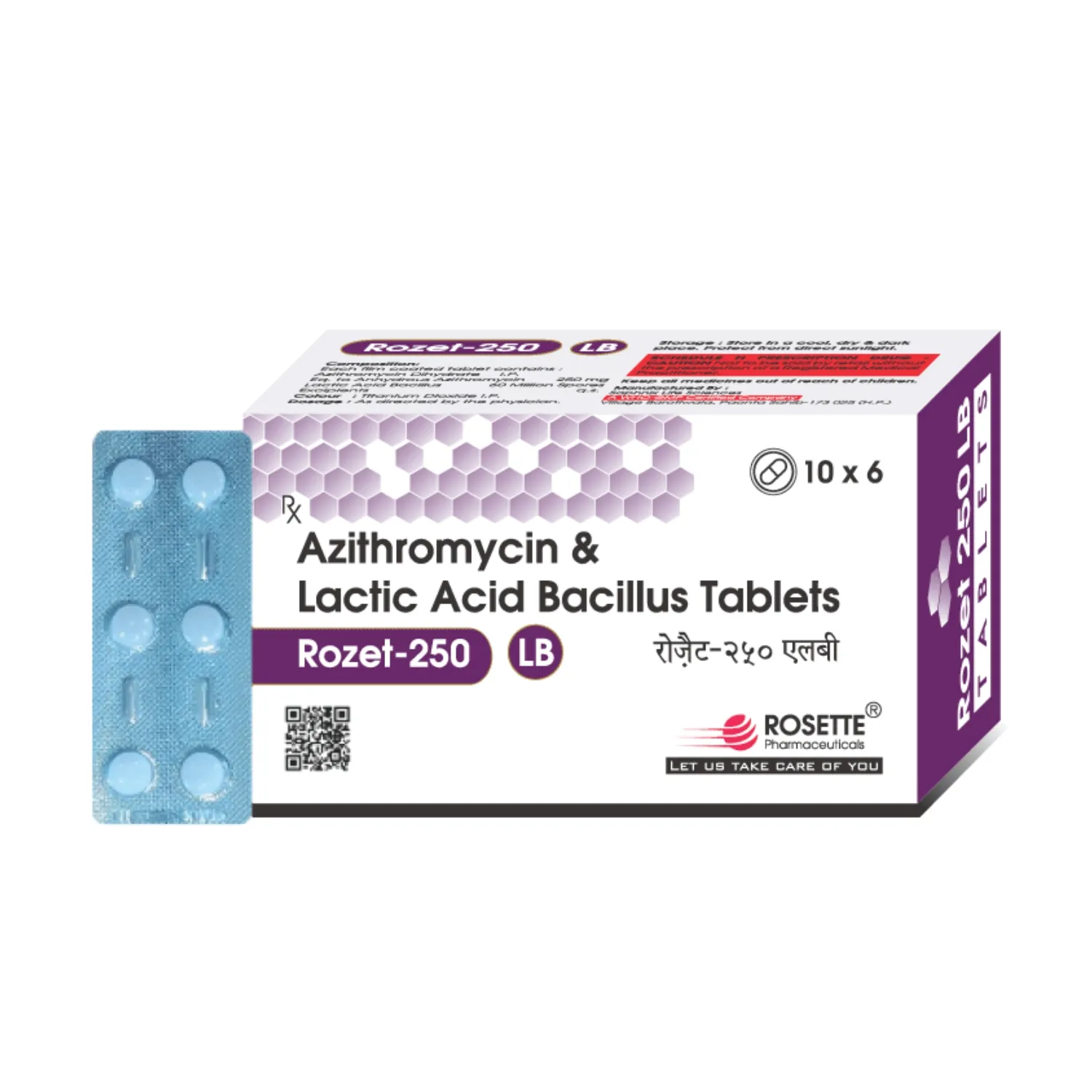
Azithromycin 250mg + Lactic Acid Bacillus tablet is a combination medicine used to treat certain bacterial infections while helping maintain healthy gut balance. Azithromycin is a macrolide antibiotic that works by stopping the growth of infection-causing bacteria.
Lactic Acid Bacillus is a probiotic added to support beneficial intestinal bacteria and help reduce digestive disturbances that may occur during antibiotic therapy. This combination is commonly prescribed for respiratory, throat, and skin infections when appropriate. It helps improve treatment tolerance while managing infection effectively under the supervision of a qualified healthcare professional.
Composition
| Ingredient | Strength | Purpose |
| Azithromycin | 250 mg | Helps control bacterial infections |
| Lactic Acid Bacillus | – | Aids in maintaining gut health |
How Does Azithromycin 250mg + Lactic Acid Bacillus Tablet Work?
- Step 1: After the tablet is taken orally, it is absorbed and distributed through the bloodstream to reach infected tissues.
- Step 2: Azithromycin targets bacterial ribosomes and interferes with their ability to produce essential proteins.
- Step 3: By interrupting protein production, the medicine prevents bacteria from multiplying and spreading the infection.
- Step 4: This helps the body’s natural immune defenses clear the infection more effectively.
- Step 5: Lactic Acid Bacillus acts as a probiotic that helps maintain the balance of beneficial bacteria in the digestive tract.
- Step 6: It supports intestinal health and helps lower the chances of digestive discomfort that may occur during antibiotic treatment.
Key Benefits of Azithromycin 250mg + Lactic Acid Bacillus Tablet
- Helps control bacterial infections: Azithromycin works against infection-causing bacteria and helps stop their growth.
- Maintains digestive balance: Lactic Acid Bacillus supports beneficial gut bacteria during antibiotic therapy.
- Lowers the risk of antibiotic-related diarrhea: The probiotic component may help reduce digestive disturbances that sometimes occur with antibiotics.
- Supports better treatment tolerance: The combination helps patients tolerate antibiotic therapy more comfortably.
- Effective broad antibacterial coverage: Azithromycin acts against many common bacterial pathogens when prescribed appropriately.
Azithromycin 250mg + Lactic Acid Bacillus Tablet Uses & Indications
- Respiratory infections: May be prescribed for certain bacterial infections of the lungs and airways, such as bronchitis or community-acquired pneumonia when appropriate.
- Upper respiratory tract infections: Sometimes used in bacterial throat infections, tonsillitis, or sinus infections caused by susceptible organisms.
- Skin and soft tissue infections: Can help treat uncomplicated bacterial infections affecting the skin or surrounding tissues.
- Selected sexually transmitted infections: In some cases, azithromycin is used under medical supervision for infections such as chlamydial infections.
- Digestive support during antibiotic therapy: The Lactic Acid Bacillus component helps maintain intestinal microflora and may reduce digestive discomfort associated with antibiotic use.
Azithromycin 250mg + Lactic Acid Bacillus Tablet Dosage & Administration
| Aspect | Details |
|---|---|
| Prescription Use | This medicine should be taken only under the supervision of a qualified healthcare professional. |
| Typical Adult Dosage | The usual dosage may include one Azithromycin 250 mg + Lactic Acid Bacillus tablet once daily, depending on the infection and the doctor’s recommendation. |
| How to Take | Swallow the tablet whole with a glass of water. It may be taken with or without food, preferably at the same time each day. |
| Treatment Duration | The duration of therapy typically ranges from 3 to 5 days, depending on the severity and type of infection. |
| Missed Dose | If a dose is missed, take it as soon as you remember. If it is close to the next scheduled dose, skip the missed one and continue with the regular schedule. |
| Important Advice | Always complete the full course prescribed by the doctor even if symptoms improve earlier, to help prevent antibiotic resistance. |
Warnings & Precautions
- Heart rhythm concerns: Use with caution in patients with existing heart rhythm disorders, QT prolongation, or electrolyte imbalance, as azithromycin may increase the risk of abnormal heart rhythms.
- Liver problems: Patients with liver disease should use this medicine carefully. Medical advice is needed if symptoms such as jaundice, dark urine, or unusual fatigue occur.
- Allergic reactions: Avoid this medicine if you have a known allergy to azithromycin, macrolide antibiotics, or any component of the formulation.
- Persistent diarrhea: Although Lactic Acid Bacillus supports gut health, severe or long-lasting diarrhea should be evaluated by a healthcare professional.
- Myasthenia gravis: Azithromycin may worsen muscle weakness in individuals with this condition and should be used with caution.
- Pregnancy and breastfeeding: This medicine should be used during pregnancy or breastfeeding only when recommended by a healthcare professional after evaluating potential risks and benefits.
FAQs
Q1: What is Azithromycin 250mg + Lactic Acid Bacillus tablet used for?
Ans: This medicine is used to treat certain bacterial infections while helping maintain healthy gut bacteria during antibiotic therapy.
Q2: Can I take Azithromycin 250mg for 3 days?
Ans: In many cases, doctors prescribe azithromycin for a short course such as 3 to 5 days, depending on the type and severity of the infection.
Q3: Is Azithromycin 250mg effective for throat infections?
Ans: Azithromycin may be prescribed for some bacterial throat infections when appropriate and under medical supervision.
Q4: How quickly does Azithromycin 250mg start working?
Ans: Many patients begin to notice improvement within 1 to 2 days, although the full treatment course should always be completed.
Q5: Can I take probiotics like Lactic Acid Bacillus with antibiotics?
Ans: Yes, probiotics are often used alongside antibiotics to support healthy intestinal bacteria and reduce digestive discomfort.
Q6: How many Azithromycin 250mg tablets can be taken in a day?
Ans: The dosage depends on the doctor’s recommendation and the infection being treated. It should always be taken exactly as prescribed.
Q7: Is Azithromycin safe for children?
Ans: Azithromycin may be used in children in certain cases, but the dose and suitability should always be determined by a healthcare professional.
Q8: What should I avoid while taking Azithromycin 250mg tablets?
Ans: Patients should avoid self-adjusting the dose, skipping doses, or stopping the medicine early without medical advice.



Reviews
There are no reviews yet.