Which PPI Is Better for Acid Reflux? Comparing Pantoprazole, Rabeprazole, Omeprazole, Esomeprazole & Lansoprazole
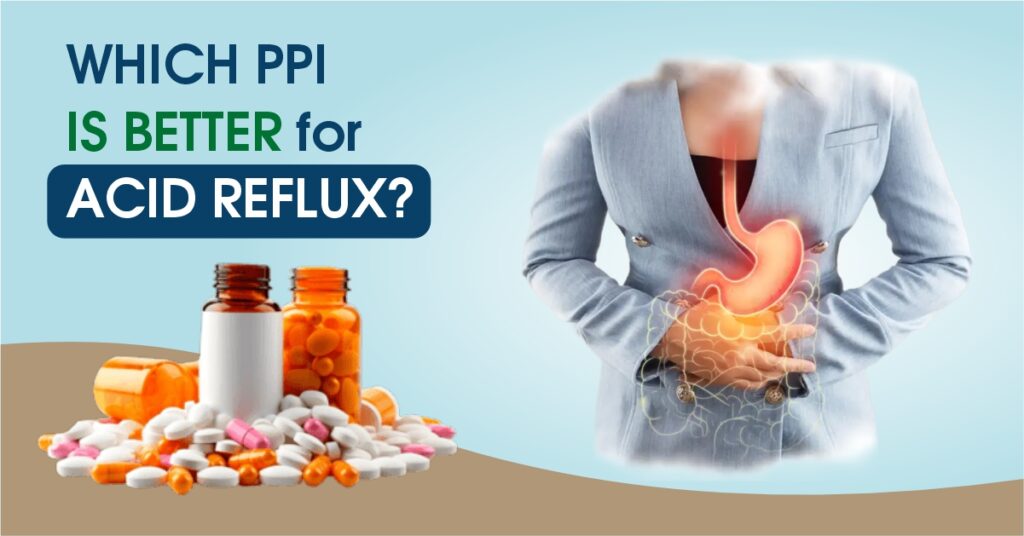
Acid reflux is one of the most common digestive complaints seen in clinical practice, and Proton Pump Inhibitors (PPIs) remain the first-line prescription therapy for it. But with five widely used PPIs on the market, patients, medical representatives, and pharma distributors are often asked some version of the same question: which one is actually “better”?
The honest, clinically accurate answer is that no single PPI is universally superior. Pantoprazole, Rabeprazole, Omeprazole, Esomeprazole, and Lansoprazole all belong to the same drug class and share a common mechanism, but they differ in onset of action, duration, drug-interaction profile, and side-effect tendencies. This guide breaks down those differences in plain, medically accurate language for healthcare readers, pharma franchise partners, medical representatives, and B2B buyers evaluating this therapy segment.
| Compliance note: This article is intended for general medical education only. Pantoprazole, Rabeprazole, Omeprazole, Esomeprazole and Lansoprazole are Schedule H prescription medicines in India. None of the information here is a substitute for professional diagnosis, and it does not promote self-medication. Any decision to start, switch, or stop a PPI should be made by a qualified doctor based on the individual’s health history. |
What Is Acid Reflux (GERD) and How Do PPIs Work?
Gastroesophageal reflux disease (GERD) develops when stomach acid repeatedly flows back into the esophagus, most often because the lower esophageal sphincter weakens or relaxes when it should not, per the National Institute of Diabetes and Digestive and Kidney Diseases (NIDDK). This backflow causes heartburn, regurgitation, and chest discomfort that can affect sleep, diet, and quality of life when it becomes chronic.
PPIs work by blocking the H+/K+-ATPase enzyme, commonly called the “proton pump,” located in the acid-producing (parietal) cells of the stomach lining. By binding to this pump, PPIs sharply reduce stomach acid output, allowing irritated esophageal tissue to heal and reducing reflux symptoms. All five PPIs compared in this article act through this same core mechanism; what differs is how quickly, how completely, and how consistently each one suppresses acid across different patients.
Pantoprazole vs Rabeprazole vs Omeprazole vs Esomeprazole vs Lansoprazole: Key Differences
Onset of Action
All five PPIs begin reducing acid production within hours of the first dose, although full symptom relief for any PPI typically builds over several days of consistent use.
- Rabeprazole is generally regarded as having the fastest and most consistent onset of acid suppression — within about an hour — because it converts to its active form with less dependence on liver enzymes, making its effect more predictable across different patients.
- Omeprazole and Esomeprazole typically produce a measurable acid-suppressing effect within 1–2 hours.
- Lansoprazole generally acts within 1–3 hours.
- Pantoprazole’s onset is broadly comparable to the group, typically around 2–2.5 hours.
Duration of Action
Because PPIs bind irreversibly to the proton pump, their clinical effect lasts far longer than their short plasma half-life would suggest — the body must synthesize new pumps before acid secretion fully returns. As a result, all five PPIs provide close to 24-hour acid control with once-daily dosing.
Esomeprazole, the S-isomer of omeprazole, undergoes less first-pass liver metabolism, giving it a higher and more sustained blood concentration than standard omeprazole. Clinical studies show this translates into a longer daily window of elevated gastric pH, which is one reason esomeprazole is sometimes favored in more severe or erosive GERD.
Effectiveness for GERD
Across large comparative studies, all five PPIs are considered broadly comparable in relieving GERD symptoms and healing esophagitis at equivalent doses. That said, some head-to-head trials show modest differences:
- Pantoprazole and Rabeprazole have shown slightly higher esophagitis-healing and symptom-relief rates than standard-dose Omeprazole and Lansoprazole in some studies of elderly patients.
- Esomeprazole has shown marginally higher healing rates than standard-dose Omeprazole in several meta-analyses, though researchers note the real-world clinical significance of this gap is debated.
In practice, these differences are small. Doctors weigh them alongside interaction risk, tolerability, and patient history rather than treating any single PPI as a guaranteed “strongest” option.
Common Side Effects
Short-term side effects are similar across the class and are usually mild and transient:
- Headache
- Diarrhea or loose stools
- Nausea
- Abdominal pain or bloating
- Flatulence
With prolonged, high-dose, or unsupervised long-term use, PPIs as a class have been associated with additional risks, according to Mayo Clinic and peer-reviewed medical literature:
- Vitamin B12 deficiency
- Low magnesium levels (hypomagnesemia)
- Reduced bone density and fracture risk
- Increased susceptibility to Clostridioides difficile (C. diff) infection
- Kidney-related concerns with extended, high-dose use
These risks are why PPIs should be used at the lowest effective dose, for the shortest necessary duration, and only under medical supervision — never as a long-term, self-directed choice.
Quick Comparison Table: 5 PPIs at a Glance
| PPI | Onset of Action | Duration | Notable Feature | Common Side Effects |
| Omeprazole | 1–2 hours | ~24 hrs (once daily) | First PPI introduced; higher CYP2C19 drug-interaction potential (e.g., clopidogrel) | Headache, diarrhea, nausea, abdominal pain |
| Pantoprazole | ~2–2.5 hours | ~24 hrs (once daily) | Comparatively lower drug-interaction profile; available in oral and IV forms | Headache, diarrhea, joint pain |
| Rabeprazole | Fastest (~1 hour) | ~24 hrs (once daily) | Less dependent on liver-enzyme activation; more consistent effect across patients | Headache, nausea, flatulence |
| Esomeprazole | 1–2 hours | ~24 hrs, more sustained suppression | S-isomer of omeprazole; higher bioavailability (AUC) | Headache, diarrhea, abdominal pain |
| Lansoprazole | 1–3 hours | ~24 hrs (once daily) | Available as an orally disintegrating tablet (ODT) | Diarrhea, headache, abdominal pain |
Drug Interactions: Why Doctors Don’t Treat All PPIs the Same
One of the most clinically important differences between these five PPIs isn’t onset or potency — it’s how they interact with other medicines.
Omeprazole and Esomeprazole are relatively strong inhibitors of the liver enzyme CYP2C19, which is also required to activate clopidogrel, a commonly prescribed antiplatelet medicine. FDA prescribing information for clopidogrel advises against combining clopidogrel with omeprazole or esomeprazole, since this can reduce clopidogrel’s antiplatelet effect. Pantoprazole, Lansoprazole, and Rabeprazole have a comparatively lower impact on this pathway and are often preferred when a patient also needs an antiplatelet or another CYP2C19-metabolized medicine.
This is a good example of why “which PPI is better” is really a clinical decision and not a one-size-fits-all answer — it depends on a patient’s full medication list, existing conditions, and treatment goals, which only a qualified physician can properly assess.
How Do Doctors Decide Which PPI to Prescribe?
Prescribers typically weigh several factors before choosing between the five options:
- Severity of GERD or presence of erosive esophagitis
- Other medicines the patient is taking, especially antiplatelets, anticoagulants, or antifungals
- Existing liver, kidney, or bone-health conditions
- Whether the patient also needs NSAID or pain-relief cover, which may call for a PPI-plus-anti-inflammatory combination
- Formulation needs — for example, an orally disintegrating tablet for patients with swallowing difficulty
- Cost, availability, and the patient’s past response to therapy
Because PPIs are Schedule H prescription medicines under Indian drug regulations, they should never be selected or switched without a doctor’s assessment, and a course should always be completed exactly as advised. For a deeper look at how these five molecules compare pharmacologically, this peer-reviewed PPI comparison review and this comparative esophagitis-healing study offer additional clinical detail.
Rosette Pharma’s PPI Formulations for Healthcare & Business Partners
Rosette Pharma manufactures WHO-GMP-certified Proton Pump Inhibitor formulations built for dependable, consistent quality across the acid-reflux and GERD treatment segment:
- Sintop 40 (Pantoprazole 40mg Tablet) — formulated for acidity, GERD, and gastric ulcer management, with once-daily dosing convenience.
- Brintop Ace (Rabeprazole 20mg + Aceclofenac 200mg) — a combination formulation for patients who need acid protection alongside pain and inflammation management, such as those on longer-term NSAID therapy.
Every formulation is manufactured under strict WHO-GMP quality standards, giving pharma franchise partners, distributors, and medical representatives a dependable product line to offer prescribers in this therapy segment.
Frequently Asked Questions
Which PPI works the fastest for acid reflux?
Rabeprazole is generally regarded as having the fastest and most consistent onset of acid suppression, often within about an hour, though full symptom relief with any PPI usually takes a few days of regular use.
Is Pantoprazole better than Omeprazole?
Neither is universally “better.” Pantoprazole has a lower drug-interaction profile and is often preferred for patients on medicines like clopidogrel, while Omeprazole is longer-established and equally effective for standard GERD in most patients. The right choice depends on the individual’s health profile.
Can I switch between different PPIs on my own?
No. PPIs are prescription medicines, and switching should only be done on a doctor’s advice, since drug interactions and dosage strength vary between molecules.
How long does it take for a PPI to relieve heartburn?
Many people notice some relief within the first 1–3 days, but doctors often recommend 2–4 weeks of consistent use for fuller symptom control in GERD.
Are PPIs safe for long-term use?
PPIs are generally well-tolerated, but prolonged use should be monitored by a doctor, since it has been linked to risks like vitamin B12 deficiency, low magnesium, and reduced bone density.
Which PPI has the fewest drug interactions?
Pantoprazole and Rabeprazole are typically associated with lower CYP2C19 drug-interaction potential compared with Omeprazole and Esomeprazole, which is one reason they may be preferred in patients on multiple medications.
The Right PPI Depends on the Patient, Not a Ranking
Pantoprazole, Rabeprazole, Omeprazole, Esomeprazole, and Lansoprazole all belong to the same well-established, effective drug class for acid reflux and GERD — but “better” depends on onset needs, interaction risk, coexisting conditions, and how an individual patient responds. There is no single winner that fits every case, which is exactly why this decision belongs with a qualified healthcare provider rather than a generic ranking.
For healthcare professionals, pharma franchise partners, medical representatives, and B2B buyers looking for WHO-GMP-certified PPI formulations backed by consistent quality and reliable supply, Rosette Pharma’s product range is built to support dependable GERD treatment protocols.
Explore our PPI formulations — Sintop 40 (Pantoprazole 40mg) or Brintop Ace (Rabeprazole + Aceclofenac) — or get in touch with our team to discuss franchise, distribution, or bulk supply opportunities.