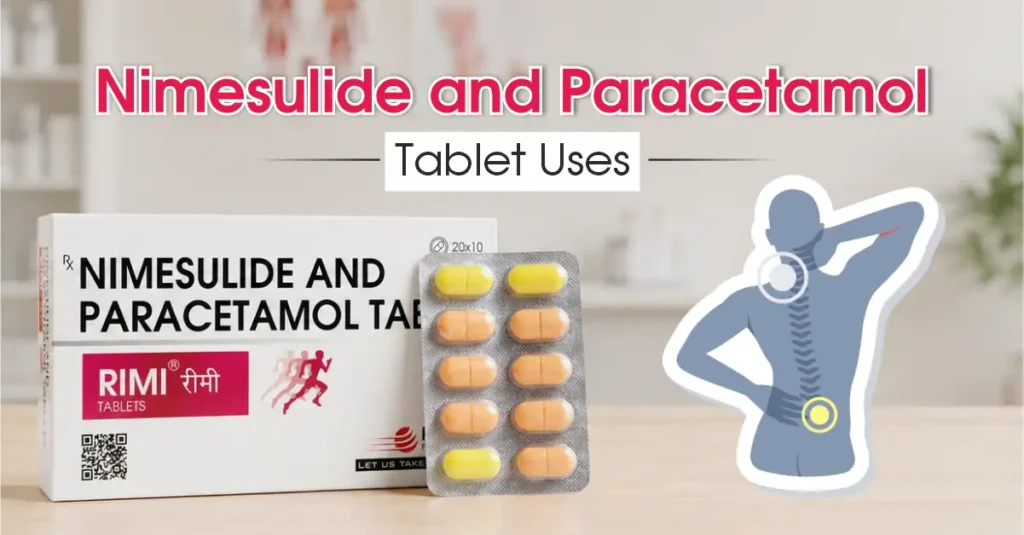
Pain and fever are among the most common reasons people look for medicine information online, whether it’s for a sudden headache, a sprained ankle, or a lingering viral fever. One combination frequently prescribed by doctors in India for such situations is nimesulide and paracetamol tablets.
This combination brings together an anti-inflammatory pain reliever (nimesulide) and a well-known pain-and-fever reducer (paracetamol). Because it combines two active ingredients with different mechanisms, doctors sometimes prescribe it when pain is accompanied by inflammation or swelling. This article explains nimesulide and paracetamol tablet uses, how the combination works, general dosage considerations, possible side effects, and important precautions. It is meant purely for educational purposes — not as a substitute for medical advice.
What Are Nimesulide and Paracetamol Tablets?
Nimesulide and paracetamol tablets are a fixed-dose combination medicine, meaning both ingredients are present together in a single tablet. Understanding each component individually helps explain why they are often paired.
Nimesulide
Nimesulide belongs to a class of medicines called non-steroidal anti-inflammatory drugs (NSAIDs). NSAIDs work by reducing the production of certain chemical messengers in the body that are responsible for pain, swelling, and inflammation. Nimesulide is generally used for short-term relief of pain associated with inflammatory conditions, and its use is subject to specific prescribing precautions, particularly regarding liver safety, which are discussed later in this article.
Paracetamol
Paracetamol (also called acetaminophen) is one of the most widely used medicines for relieving mild to moderate pain and reducing fever. It is classified as an analgesic (pain reliever) and antipyretic (fever reducer). Paracetamol is generally considered gentler on the stomach compared to typical NSAIDs, which is one reason it is frequently combined with other pain-relief medicines. Readers who want a deeper look at paracetamol on its own can refer to this detailed paracetamol uses, dosage and side effects guide.
Why Are These Two Combined?
When nimesulide and paracetamol are combined, the intent is to address pain and inflammation through nimesulide’s anti-inflammatory action, while paracetamol supports additional pain relief and helps manage fever. This is why the combination may be considered by doctors in situations involving pain that is linked with swelling or inflammation, rather than pain alone. It’s worth noting that this is a prescription-guided decision — the choice between a single-ingredient medicine and a combination like this depends on the patient’s specific condition and history, which only a qualified healthcare professional can assess.
Nimesulide and Paracetamol Tablet Uses
Doctors may consider nimesulide and paracetamol tablets for the short-term relief of certain types of pain and inflammation-related discomfort. It is important to understand that this medicine treats symptoms — it does not cure the underlying condition causing the pain.
Commonly discussed uses include:
- Relief from muscle pain and stiffness
- Joint pain and discomfort associated with minor inflammatory conditions
- Pain following minor injuries, sprains, or strains
- Dental pain, including discomfort after minor dental procedures
- Fever accompanied by body ache
- Short-term relief of certain types of acute pain, as advised by a doctor
This is a general overview of situations in which this type of combination may be considered — it is not a checklist for self-diagnosis. Whether nimesulide and paracetamol tablets are suitable for a particular type of pain or fever should always be confirmed by a doctor, since the underlying cause of the discomfort matters as much as the symptom itself.
How Does Nimesulide + Paracetamol Work?
In simple terms, both ingredients act on the body’s pain and inflammation signalling pathways, but in slightly different ways.
- Nimesulide works mainly by reducing the activity of certain enzymes involved in producing chemicals (called prostaglandins) that cause pain, swelling, and inflammation at the site of injury or irritation.
- Paracetamol is thought to act more centrally, helping to reduce the brain’s perception of pain and helping regulate the body’s temperature-control centre, which is how it helps bring down fever.
When combined, the two ingredients may offer a broader approach to managing pain that involves both inflammation and general discomfort. This explanation is intentionally kept simple; the exact pharmacological mechanisms are more detailed and are outlined in the prescribing information reviewed by your doctor or pharmacist.
Nimesulide and Paracetamol Tablet Dosage
There is no single “correct” dose of nimesulide and paracetamol tablets that applies to everyone. The right dosage and duration depend on several individual factors, including:
- The patient’s age and body weight
- The severity and type of pain or fever
- Existing medical conditions (especially liver, kidney, or stomach-related issues)
- Other medicines the patient is currently taking
- The doctor’s clinical judgment based on examination
Because of this, this article deliberately does not present a fixed dosage figure as a general recommendation. A dose that is appropriate for one person may not be safe for another.
A few general points to keep in mind, always in line with what a doctor or pharmacist advises:
- Take the tablet exactly as prescribed, in the exact strength and frequency advised.
- Do not take more than the recommended dose, and do not take it more frequently than instructed, even if pain or fever does not improve immediately.
- Avoid extending the treatment duration on your own; nimesulide-containing combinations are typically meant for short-term use only.
- If a dose is missed, take it as soon as remembered, unless it is almost time for the next dose — in that case, skip the missed dose rather than doubling up. Your doctor or pharmacist can give more specific guidance based on your prescription.
- This medicine, like many others, may be advised to be taken after food. To understand why some medicines carry this instruction, see this article on why some medicines need to be taken with food.
If you’re looking at Rosette Pharma’s Nimesulide 100mg + Paracetamol 325mg tablet product page, you’ll notice the composition and packaging details are listed there — but the actual prescribed dose and duration must come from your treating doctor.
Nimesulide and Paracetamol Tablet Side Effects
Like all medicines, nimesulide and paracetamol tablets may cause side effects in some people, while others may tolerate the medicine well. Side effects can vary from mild and temporary to rare but serious.
Commonly Reported, Generally Mild Side Effects
- Nausea or an upset stomach
- Heartburn or mild stomach discomfort
- Dizziness
- Drowsiness in some individuals
- Skin rash or mild itching
Symptoms That Need Urgent Medical Attention
Stop the medicine and seek medical help promptly if you notice:
- Yellowing of the skin or eyes, dark urine, or unusual tiredness (possible signs of liver-related issues)
- Severe stomach pain, black or bloody stools, or vomiting blood
- Signs of an allergic reaction, such as swelling of the face, lips, or throat, difficulty breathing, or a widespread rash
- Unusual bruising or bleeding
- Reduced urine output or swelling in the legs/ankles
This list is not exhaustive. If you experience any symptom that feels unusual, severe, or concerning while taking this medicine, contact a doctor rather than waiting to see if it passes.
Precautions and Warnings
Certain groups of people need to be especially careful with nimesulide and paracetamol tablets, and should only use this medicine under close medical supervision:
- Liver problems: Nimesulide carries specific safety considerations related to liver function. It should be used cautiously, for the shortest necessary duration, and avoided in people with known liver disease unless specifically advised by a doctor.
- Kidney problems: NSAIDs like nimesulide can affect kidney function in some individuals, particularly with prolonged use or in those with pre-existing kidney issues.
- Stomach ulcers or gastrointestinal bleeding: People with a history of stomach ulcers or GI bleeding should discuss the risks with their doctor before using NSAID-containing medicines.
- NSAID allergies: Anyone with a known allergy or hypersensitivity to NSAIDs (such as aspirin or ibuprofen) should inform their doctor before taking this combination.
- Pregnancy and breastfeeding: This medicine should only be used during pregnancy or while breastfeeding if specifically advised by a doctor after weighing the potential risks and benefits.
- Alcohol use: Combining alcohol with paracetamol and NSAIDs may increase the risk of liver and stomach-related side effects, so it’s best discussed with your doctor.
- Older adults: Elderly patients may be more sensitive to side effects, particularly gastrointestinal and kidney-related ones, and may need closer monitoring.
- Other medicines: Certain other medicines may interact with nimesulide or paracetamol, so full disclosure of your current medications is important.
- Prolonged use: This combination is generally intended for short-term symptom relief. Long-term or repeated use without medical supervision is not advisable.
Drug Interactions
Nimesulide and paracetamol tablets may interact with other medicines, which can affect how well the medicine works or increase the risk of side effects. It’s important to tell your doctor or pharmacist about:
- Any other painkillers or NSAIDs you are taking, including over-the-counter ones
- Blood-thinning medicines
- Medicines for high blood pressure or heart conditions
- Medicines for diabetes
- Any supplements or herbal products you use regularly
This is not a complete list of possible interactions. Rather than relying on a general list, always share your full current medication history with your healthcare provider so they can check for anything that might be relevant to you specifically.
Who Should Avoid or Use Caution With This Medicine?
Professional medical advice is particularly important for:
- People with a history of liver or kidney disease
- People with active or past stomach ulcers or gastrointestinal bleeding
- Pregnant or breastfeeding women
- People with known allergies to NSAIDs
- Elderly patients with multiple existing health conditions
- People already taking other NSAIDs, blood thinners, or multiple prescription medicines
- Children, unless specifically prescribed and dosed by a pediatrician
If you fall into any of these categories, do not start this medicine on your own — consult a doctor first.
Frequently Asked Questions
Q: What are nimesulide and paracetamol tablets used for?
A: They are generally used for short-term relief of certain types of pain and fever, particularly where inflammation is also present, as advised by a doctor.
Q: Can nimesulide and paracetamol tablets be used for fever?
A: Yes, paracetamol in this combination can help with fever, but the medicine should be used only as recommended by a healthcare professional.
Q: Is nimesulide safe for long-term use?
A: No, nimesulide-containing medicines are generally recommended for short-term use only due to safety considerations, particularly related to the liver.
Q: Can I take this medicine after drinking alcohol?
A: It’s best to avoid alcohol while taking this medicine, as it may increase the risk of liver and stomach-related side effects.
Q: Can children take nimesulide and paracetamol tablets?
A: This combination is generally not recommended for children unless specifically prescribed by a pediatrician.
Q: Can this medicine be taken during pregnancy?
A: It should only be used during pregnancy if a doctor specifically advises it after assessing risks and benefits.
Q: When should I contact a doctor while taking this medicine?
A: Contact a doctor if you notice signs of an allergic reaction, yellowing of skin or eyes, severe stomach pain, unusual bleeding, or if symptoms don’t improve as expected.
Final Takeaway
Nimesulide and paracetamol tablets are a combination medicine that may be prescribed for short-term relief of certain types of pain and fever, particularly where inflammation is involved. Nimesulide contributes anti-inflammatory action, while paracetamol supports pain and fever relief — together offering a broader approach to symptom management when a doctor determines it’s appropriate.
That said, this is a prescription decision that depends on individual health factors, especially liver function, existing medical conditions, and other medicines being used. It is not meant for casual or prolonged self-use. Always follow your doctor’s advice on dosage and duration, disclose your full medical and medication history, and seek prompt medical attention if you notice any unusual or severe symptoms.
For more details on the composition and packaging of this medicine, you can visit Rosette Pharma’s Nimesulide 100mg + Paracetamol 325mg tablet page. You may also find it useful to browse the tablets category for related formulations, or read about another NSAID-based combination in this guide on diclofenac sodium tablet uses.