
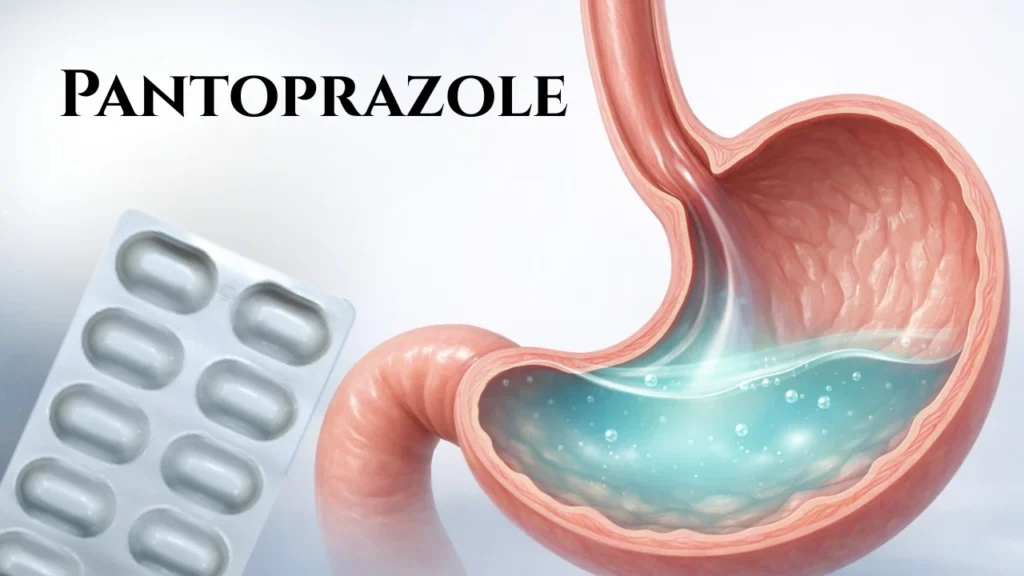
Pantoprazole is a medicine that is commonly linked with problems caused by too much acid in the stomach. When the stomach produces more acid than needed, it can lead to discomfort in the chest or throat and irritation inside the stomach. Pantoprazole works by lowering the amount of acid the stomach makes, which helps reduce this irritation over time.
This article explains pantoprazole in a simple and easy way. It is meant for general understanding only, not for medical advice or treatment decisions. Here, you will learn the basic purpose of pantoprazole, how it works inside the body, and what people usually need to know about it in everyday terms.
What Is Pantoprazole?
Pantoprazole is a medicine that helps reduce the amount of acid made by the stomach. It is mainly used when the stomach produces more acid than normal, which can cause irritation or discomfort in the stomach and throat.
Pantoprazole belongs to a group of medicines called proton pump inhibitors (PPIs). Instead of neutralizing acid that is already present, it works in a different way. Pantoprazole slows down the process that creates acid in the stomach, which helps lower acid levels over time and allows irritated areas to recover naturally.
How Pantoprazole Works in the Body
Inside the stomach, acid is released through tiny systems often called acid pumps. These pumps help with digestion, but when they produce too much acid, irritation can happen.
Pantoprazole works by slowing down these acid pumps, which reduces acid levels and gives the stomach and food pipe time to recover.
In simple terms:
- The stomach has small “acid pumps” that release acid
- Pantoprazole partially turns these pumps down
- Less acid is produced over time
- Lower acid helps irritated areas heal naturally
General Medical Uses of Pantoprazole
Pantoprazole is used for health problems that happen when the stomach makes too much acid. High acid levels can irritate the stomach or the food pipe and may cause ongoing discomfort if not controlled.
It is commonly used for:
- Frequent heartburn, where acid causes a burning feeling in the chest or throat
- Acid reflux, when stomach acid moves upward into the food pipe
- Ulcers, which are sore or damaged areas in the stomach or food pipe lining
- Rare conditions where the stomach produces an unusually large amount of acid
Pantoprazole helps by lowering acid production, which reduces irritation and allows affected areas to recover naturally.
Common Side Effects
Most people who use pantoprazole do not experience serious problems. When side effects do occur, they are usually mild and often improve on their own as the body adjusts.
Some commonly reported side effects include:
- Headache
- Nausea
- Stomach pain
- Gas or bloating
- Dizziness
These effects are usually temporary and do not last long for most people.
Long-Term Safety Considerations
Pantoprazole is generally considered safe, but using it for a long period may require some level of monitoring. This helps ensure that the body continues to stay balanced while the medicine is being used.
With long-term use:
- The body may absorb vitamin B12 and magnesium less efficiently
- Bone health may need attention, especially in older adults
- Lower stomach acid levels may slightly increase the risk of certain stomach infections
These points are usually linked with extended use and do not affect everyone. Awareness and proper guidance help keep long-term use safe and well managed.
Is Pantoprazole an Antacid?
No, pantoprazole is not an antacid.
Antacids and pantoprazole work in different ways:
- Antacids neutralize acid that is already present in the stomach. They act quickly but provide short-term relief.
- Pantoprazole works earlier in the process by reducing how much acid the stomach produces in the first place.
A simple way to understand this is with an example. Antacids are like a sponge that cleans up spilled water, while pantoprazole is like turning down the faucet so less water flows out.
Faqs
Q1: What type of medicine is pantoprazole?
Ans: Pantoprazole is a proton pump inhibitor (PPI), a type of medicine that reduces stomach acid production.
Q2: Does pantoprazole stop acid production or neutralize acid?
Ans: It reduces acid production by slowing the process that makes acid, not by neutralizing existing acid.
Q3: Is pantoprazole meant for short-term or long-term use?
Ans: It can be used for both short-term and long-term needs, depending on the condition and guidance.
Q4: Can pantoprazole cause side effects?
Ans: Yes, some people may experience mild side effects, which are usually temporary.
Q5: Is pantoprazole the same as an antacid?
Ans: No, pantoprazole lowers acid production, while antacids neutralize acid already in the stomach.
Medical Disclaimer
This content is provided for educational purposes only. It is not a substitute for professional medical advice, diagnosis, or treatment. Individual health needs and treatment decisions are always determined by a qualified healthcare professional.