
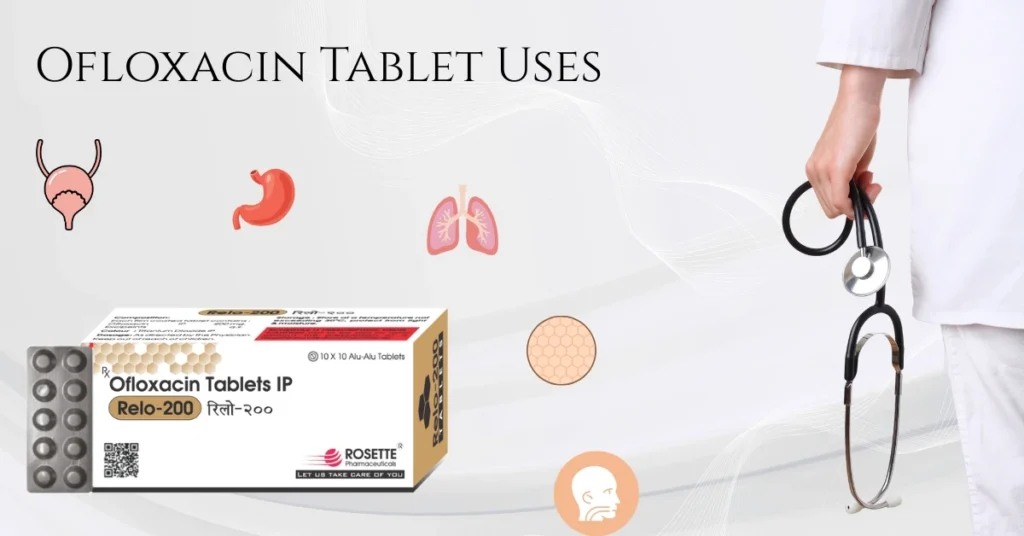
Ofloxacin is a broad-spectrum antibiotic that doctors in India often choose for infections that don’t respond well to basic treatment. It covers a wide range of bacteria, which is why it is used across different infection types—from the urinary tract to the lungs, stomach, skin, and more.
Here, the focus stays only on how it is used in real clinical situations, without going into how the medicine works inside the body or the deeper side effects you’ve already covered in other articles. The goal is to explain its use the same way a doctor would describe it to a patient—clear, practical, and focused on when this medicine is actually needed.
Ofloxacin Tablet Uses and Medical Reasons Behind Its Preference
Doctors rely on Ofloxacin in situations where they must be confident that the antibiotic will reach the infection site and act with enough strength. Many common infections involve bacteria that have already resisted lighter medicines, so choosing something more dependable becomes necessary.
Because Ofloxacin spreads well through deeper tissues and maintains steady levels in places like the urinary tract, lungs, skin, and prostate, it gives doctors a practical advantage when they need a single medicine that can cover multiple possibilities. This is why it is often selected when the infection is moderate to severe, or when a patient has already tried simpler antibiotics without improvement.
Key reasons doctors choose Ofloxacin:
- Works against a broad range of Gram-negative bacteria often found in UTI, GI, and ENT infections
- Reaches deeper tissues where mild antibiotics may not be effective
- Useful when resistance patterns show reduced response to basic antibiotics
- Provides reliable coverage in mixed or complicated infections
- Not preferred for viral illnesses or mild bacterial infections that can be treated with safer first-line options
Ofloxacin Tablet Uses by Infection Type
Ofloxacin is used across several infection types because it reaches different parts of the body with steady strength and targets the bacteria that commonly cause problems. Instead of relying on one fixed pattern, doctors decide its use based on where the infection has started—whether it is in the urinary tract, lungs, stomach, skin, reproductive organs, or ENT areas. Each infection type responds differently, so understanding how Ofloxacin fits into these situations helps explain why it is chosen in certain cases and avoided in others.
Urinary Tract Infections (UTI)
- Effective for E. coli, Klebsiella, and Proteus infections
- Works well in moderate UTI with burning, fever, or flank pain
- Reaches high concentration in urine for faster symptom relief
- Helpful in complicated UTI cases
- Penetrates prostate tissue effectively (useful in prostatitis)
- Not recommended in pregnancy
- Avoid in severe kidney disease unless doctor adjusts dose
Respiratory Infections (Pneumonia, Bronchitis, COPD Flare)
- Useful in bacterial bronchitis with thick sputum
- Helps in atypical pneumonia patterns
- Good penetration into lung tissues
- Not preferred for severe pneumonia caused by Streptococcus pneumoniae
- Best for mixed bacterial or atypical infection cases
- Not suitable for viral respiratory illnesses
Gastrointestinal Infections (Diarrhea, Dysentery, Typhoid)
- Helps in traveller’s diarrhea caused by bacteria
- Useful for food poisoning when bacteria are involved
- May be prescribed in typhoid when sensitivity confirms response
- Avoid in children unless a specialist recommends it
- Works in dysentery with mucus or blood in stools
Skin & Soft Tissue Infections

- Suitable for mild cellulitis
- Helps in wound infections with bacterial signs
- Can be used in early-stage diabetic foot infections
- Deep tissue penetration offers better results in specific cases
- Avoid misuse to prevent antibiotic resistance
Reproductive & STI Infections
- Effective against chlamydia infections
- Used for certain strains of gonorrhea
- Helps in pelvic inflammatory disease
- Supports treatment of chronic prostatitis (doctor-guided long course)
- Should be used only under specialist supervision due to high resistance rates
ENT Infections (Ear, Eye, Throat)
- Useful in ear discharge caused by bacterial otitis
- Helps in bacterial conjunctivitis
- Supports treatment of sinus infections that show bacterial symptoms
- Oral tablets needed only when infection becomes systemic
Dosage
Doctors usually prescribe Ofloxacin in a range that stays around 200 to 400 mg taken twice a day, depending on the type and severity of the infection. The aim is to keep the medicine’s level steady enough in the body so it can reach the tissues where the infection is sitting.
The dose may be higher or longer when the infection is more complicated, such as in a stubborn UTI, chronic prostatitis, typhoid cases that respond to Ofloxacin, or respiratory infections that do not improve with basic antibiotics. People who have kidney problems often need a lower dose or a longer gap between doses so the medicine does not build up in the system. Doctors adjust the plan based on symptoms, age, and overall health, keeping the treatment both effective and safe.
How Long to Take Ofloxacin
The length of an Ofloxacin course depends on how serious the infection is and how quickly the symptoms respond to treatment. For simple problems like an uncomplicated UTI or a mild bacterial diarrhea episode, doctors usually keep the course short, often around three to five days, because these infections clear once the bacterial load is brought under control.
Respiratory issues take more time, so the medicine is generally continued for about five to seven days to ensure the infection in the lungs or airways settles properly. Some conditions, such as prostatitis, need a much longer duration because the infection sits deep inside tissues where antibiotics take more time to reach stable levels. In those cases, only a doctor decides the exact length of therapy.
Stopping the course early is one of the biggest reasons antibiotics fail. Even if symptoms feel better within a day or two, the remaining bacteria can still multiply and become harder to treat later. This increases the risk of antibiotic resistance, which means the same medicine may not work again when it is truly needed. Completing the course exactly as advised is the safest way to avoid complications and keep the treatment effective.
What to Avoid While Taking Ofloxacin
A few things need to be avoided while taking Ofloxacin because they can reduce how well the medicine is absorbed or increase the chances of side effects. Some foods, supplements, and medicines interfere with its action, while certain activities can put extra strain on the body. Keeping these points in mind helps the treatment work smoothly and keeps the risk low.
Things to avoid during Ofloxacin treatment:
- Antacids, as they reduce absorption
- Supplements containing iron, zinc, or calcium
- Milk and other dairy products without a proper two-hour gap
- Steroids, which can increase tendon problems
- NSAIDs in sensitive individuals due to seizure risk
- Driving if the medicine causes dizziness
- Heavy workouts that put stress on tendons
Important Safety Points
Ofloxacin needs a little extra caution in some situations, and these points help ensure it is used safely without repeating the detailed explanations already covered in your previous articles. These are the quick checks doctors keep in mind before prescribing it and the warnings patients should follow while on the medicine.
- Not recommended for pregnant or breastfeeding women
- Not meant for children unless a specialist approves it
- Dose may need adjustment in kidney disease
- Stop taking it immediately if tendon pain or swelling appears
- Limit direct sunlight exposure to avoid sensitivity reactions
Conclusion
Ofloxacin is most helpful in infections where stronger, wide-coverage treatment is needed and where the bacteria are known to resist milder medicines. It works best in moderate UTIs, certain respiratory infections, specific gastrointestinal problems, early skin and soft-tissue infections, and doctor-guided reproductive or ENT cases.
At the same time, it should be avoided during pregnancy, breastfeeding, in most children, and in people who have severe kidney issues unless a specialist adjusts the dose. If symptoms fail to improve, worsen, or new signs like tendon pain, numbness, or severe diarrhea appear, it’s important to stop the medicine and speak to a doctor without delay.
Note: This article is for general information only and should not be used as a substitute for medical advice.
Always consult a qualified doctor before starting, stopping, or changing any treatment.
FAQs
Q1: Does Ofloxacin work for viral infections?
Ans: No, Ofloxacin does not work against viral illnesses like cold, flu, or viral fever. It is effective only for bacterial infections.
Q2: How long does Ofloxacin take to give relief in UTI?
Ans: Most people feel better within 24–48 hours, but the full prescribed course must be completed.
Q3: Can Ofloxacin be taken on an empty stomach?
Ans: Yes, it can be taken on an empty stomach, though taking it after food may reduce stomach discomfort.
Q4: Is Ofloxacin safe for loose motion?
Ans: It is safe only when the diarrhea is bacterial. It should not be used for viral or non-infectious loose motion.
Q5: Can Ofloxacin be taken with alcohol?
Ans: It’s better to avoid alcohol because it may worsen dehydration and irritation during the course.
Q6: How many times a day can Ofloxacin be taken?
Ans: Usually twice a day, but the exact dosing depends on the infection and the doctor’s recommendation.