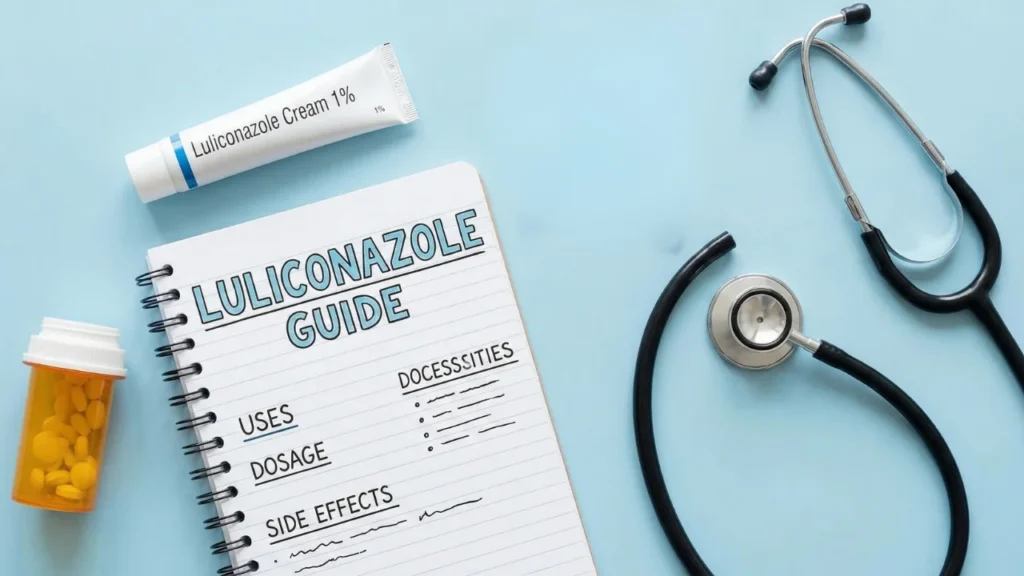
What is Luliconazole?
Luliconazole is a prescription antifungal medicine designed to treat common skin infections caused by fungi. When certain types of fungi grow on your skin, they create uncomfortable conditions like athlete’s foot, jock itch, and ringworm. This medication works directly on the skin where these fungal infections develop.
The drug belongs to a group of medicines called azole antifungals. It targets specific fungi known as dermatophytes—microscopic organisms that feed on keratin, a protein found in your skin, hair, and nails. These dermatophytes are responsible for most fungal skin infections people experience.
Luliconazole comes as a 1% cream that you apply directly to the affected area. As a skin infection medicine, it stops the fungi from growing and eventually kills them. This fungal treatment drug is only available with a doctor’s prescription and is meant for external use on the skin surface.
Unlike older infection control medicines that may require weeks of treatment, luliconazole offers a shorter treatment course. Most people use it once daily for one to two weeks, depending on which fungal infection they’re treating.
What Infections Luliconazole Treats
Approved Uses for Fungal Skin Problems
Doctors prescribe luliconazole specifically for three types of fungal skin infections that affect millions of people each year. These conditions share similar causes but appear on different parts of the body. Each infection creates an itching skin infection that can spread if left untreated. The cream targets the fungi responsible for these uncomfortable and sometimes embarrassing skin problems.
- Interdigital Tinea Pedis (Athlete’s Foot Between the Toes)
This contagious fungal infection develops in the spaces between your toes, especially the fourth and fifth toes. You’ll notice peeling, cracking, redness, and intense itching. The skin fungus symptoms often include a white, soggy appearance between the toes and an unpleasant odor. Luliconazole treats this condition with a two-week, once-daily application. - Tinea Cruris (Jock Itch)
This fungal rash appears in the groin, inner thighs, and buttocks area. It creates a red, ring-shaped rash with raised edges that burns and itches intensely. The infection thrives in warm, moist areas and spreads through contact or contaminated clothing. Treatment typically lasts one week. - Tinea Corporis (Ringworm of the Body)
Despite its name, ringworm has nothing to do with worms. This infection causes circular, red patches with clearer centers anywhere on your torso, arms, or legs. The distinctive ring pattern gives this contagious fungal infection its common name. A one-week treatment course usually clears the condition.
How Luliconazole Works
Luliconazole attacks fungi at their most vulnerable point—their outer protective layer. Every fungal cell has a membrane that keeps it alive and functioning properly. This membrane contains a vital substance called ergosterol, which works like the framework of a building. Without ergosterol, the fungal cell cannot maintain its structure.
The antifungal action of luliconazole blocks a specific enzyme called lanosterol 14-alpha-demethylase. This enzyme is essential for producing ergosterol. When luliconazole stops this enzyme from working, the fungi cannot create the ergosterol they need to survive. This leads to fungal growth inhibition at the cellular level.
As the medication continues to work, holes develop in the fungal cell membranes. These damaged cells can no longer function, and they eventually die. This process stops fungus growth completely rather than just slowing it down. The medicine achieves infection spread control by eliminating the fungi in the treated area and preventing them from reproducing.
What makes luliconazole particularly effective is its ability to stay in your skin for extended periods. Even though you apply it just once daily, it continues healing fungal infection throughout the day. The medication penetrates deep into the skin layers where fungi live, ensuring thorough treatment of the affected area.
How to Use Luliconazole Properly
Step-by-Step Application Guide
Getting the best results from luliconazole depends on applying it correctly and consistently. Following these daily treatment steps ensures the medicine reaches the infection and works effectively.
- Step 1: Clean and Dry the Area Wash the affected area with mild soap and water. Pat the skin completely dry with a clean towel. Moisture can prevent the cream from absorbing properly, so make sure the area is thoroughly dry before proceeding.
- Step 2: Apply a Thin Layer Squeeze a small amount of cream onto your fingertip. Apply medicine properly by gently rubbing a thin layer over the entire affected area. Don’t forget to extend the application about one inch beyond the visible rash onto the surrounding healthy skin. This prevents the infection from spreading to nearby areas.
- Step 3: Include Surrounding Skin Fungi often spread beyond what you can see. Covering the border area ensures you treat any microscopic fungi that haven’t yet caused visible symptoms. This step is crucial for complete healing.
- Step 4: Wash Your Hands Immediately After applying the cream, wash your hands thoroughly with soap and water. This prevents accidentally spreading the infection to other parts of your body or to other people.
- Step 5: Follow Your Treatment Duration Continue regular application for the full treatment course completion, even if symptoms improve quickly. For athlete’s foot between the toes, use the cream once daily for two weeks. For jock itch and ringworm, the treatment duration is one week. Stopping early may allow the fungi to return.
Possible Side Effects
What to Expect at the Application Site
Most people tolerate luliconazole well, but like any medication, it can cause unwanted reactions in some users. The majority of side effects involve mild side effects that occur right where you apply the cream. These skin reaction symptoms typically appear shortly after application and usually fade on their own without needing medical attention.
Temporary Irritation You Might Notice:
- Burning sensation – A warm, burning feeling at the application site that often lasts just a few minutes after applying the cream.
- Stinging – A sharp, prickling sensation when the medicine first contacts your skin, especially if the area is raw or cracked.
- Redness – The treated skin may appear pinker or more red than the surrounding areas, usually mild and temporary.
- Itching – Some people experience increased itching right after application, though this should decrease as the infection clears.
- Irritation – General discomfort, tenderness, or sensitivity where you’ve applied the medication.
- Dryness – The skin may feel tight, dry, or start to flake as it heals.
- Swelling – Minor puffiness or slight swelling around the treated area.
- Warmth – A feeling of heat radiating from the application site.
These temporary irritation effects happen in less than one percent of people using the medication. They’re usually signs that your skin is adjusting to the treatment rather than indicators of a serious problem.
Safety Tips and Precautions
Essential Guidelines for Safe Use
Understanding medication precautions helps you use luliconazole safely and effectively. Following these guidelines protects you from potential complications while ensuring the treatment works as intended. Always seek medical advice before starting any new medication, especially if you have specific health concerns.
Key Safety Measures for Safe Medicine Use:
- For External Use Only – Never swallow luliconazole or apply it inside your mouth, eyes, nose, or vaginal area. If the cream accidentally gets in your eyes, rinse immediately with plenty of water.
- Pregnancy Safety Considerations – Pregnant women should discuss the risks and benefits with their doctor before using this medication. Animal studies show no major birth defects, but human data remains limited.
- Breastfeeding Caution – It’s unknown whether luliconazole passes into breast milk. Nursing mothers need doctor consultation to weigh the benefits against potential risks to the baby.
- Children Use Restrictions – For ringworm (tinea corporis), children aged 2 years and older can use the cream. For athlete’s foot and jock itch, it’s approved only for children 12 years and older.
- Allergy Check – Don’t use luliconazole if you’ve had allergic reactions to it or similar antifungal medications in the past.
- Avoid Covering the Area – Unless your doctor specifically instructs otherwise, don’t wrap, bandage, or cover the treated skin with tight clothing. The area needs air circulation.
- No Sharing – Don’t share your prescription with others, even if they have similar symptoms.
When Luliconazole May Not Work
Sometimes luliconazole doesn’t clear up a skin problem as expected, and several factors can explain why treatment not effective occurs. The most common issue is incomplete treatment—stopping the medication too early because symptoms improved.
Even when the rash looks better, fungi may still be living deep in your skin layers. Quitting before finishing the full course almost guarantees infection recurrence within weeks.
Another possibility involves incorrect diagnosis. What appears to be a fungal infection might actually be eczema, psoriasis, or another skin condition that won’t respond to antifungal medication.
If you’ve been using the cream correctly for two weeks without any improvement, the original diagnosis may need reconsideration.
In rare cases, you might be dealing with a resistant fungus strain that doesn’t respond to azole antifungals like luliconazole. These fungi have developed mechanisms to survive despite the medication’s action. This resistance is uncommon but possible, especially if you’ve used multiple antifungal treatments in the past.
A severe infection that has spread extensively or penetrated very deep into the skin may require stronger systemic medications taken by mouth rather than a topical cream. Similarly, if your immune system is weakened due to diabetes, HIV, or medications that suppress immunity, topical treatment alone might not be sufficient to eliminate the fungi completely.
Hygiene Tips for Faster Recovery
Medication alone isn’t enough—good hygiene practices play a crucial role in clearing fungal infections and stopping them from coming back. Combining luliconazole with these personal hygiene habits speeds up recovery and provides effective infection prevention.
Essential Steps to Prevent Fungal Spread:
- Keep Affected Areas Dry – Fungi thrive in moisture. After showering or sweating, dry the infected area thoroughly, especially between toes and skin folds
- Change Clothing Daily – Wear fresh underwear, socks, and clothes every day. Fungi can survive in fabric and reinfect your skin
- Wash Items in Hot Water – Clean towels, sheets, and clothing in hot water (at least 140°F) to kill fungal spores that might cause reinfection
- Wear Breathable Fabrics – Choose cotton underwear and loose-fitting clothes that allow air circulation as part of your skin care routine
- Don’t Share Personal Items – Keep your towels, shoes, clothing, and razors separate from others to maintain clean skin care
- Disinfect Shoes and Socks – Spray the inside of shoes with antifungal powder and wash socks in hot water
- Avoid Walking Barefoot – Wear shower shoes in public pools, gyms, and locker rooms where fungi spread easily
- Practice Good Foot Hygiene – For athlete’s foot, dry between each toe carefully and change socks if your feet sweat
FAQs
Q1: How long does luliconazole take to work?
Ans: Most people start noticing improvement within a few days, but the full treatment course should be completed to ensure complete recovery.
Q2: Is luliconazole safe to use?
Ans: When used as prescribed by a doctor, luliconazole is generally safe, but mild skin irritation may occur in some users.
Q3: What should I do if I miss a dose?
Ans: Apply the medicine as soon as you remember. If it is almost time for the next application, skip the missed dose and continue the regular schedule.
Q4: How long should I continue the treatment?
Ans: Continue using the medicine for the full recommended duration even if symptoms improve earlier, to prevent the infection from returning.
Q5: Can I stop using the medicine once the infection looks healed?
Ans: No, stopping early can allow the fungus to grow again. Always complete the full course advised by your doctor.
Q6: How long does complete recovery usually take?
Ans: Recovery time depends on the type and severity of the infection, but most mild fungal infections improve within 1–2 weeks when treated properly.
Q7: Is it safe to use this medicine for a longer period?
Ans: Use the medicine only for the duration recommended by your doctor. Prolonged use without medical advice is not recommended.
Medical Disclaimer: This information is for educational purposes only and is not a substitute for professional medical advice. Always consult a qualified healthcare professional before using any medication or treatment. Do not self-medicate without proper medical guidance.