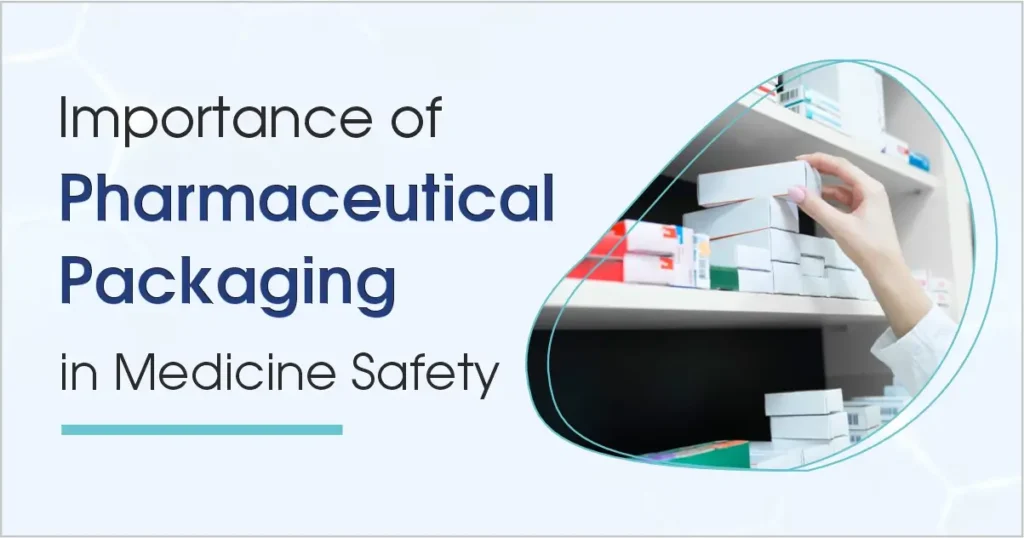
When most people think about a medicine, they picture the tablet, capsule, or syrup inside the pack — not the pack itself. Yet pharmaceutical packaging plays a direct role in whether that medicine remains safe, effective, and fit for use by the time it reaches a patient.
Good packaging is not about attractive branding. It protects a formulation from contamination, moisture, light, oxygen, physical damage, and temperature changes as the product moves from a manufacturing facility, through distribution, to a pharmacy shelf, and finally into a patient’s hands. A well-designed pack also carries the information — batch number, expiry date, composition, and storage instructions — that pharmacists and patients rely on to use a medicine correctly.
This article looks at why pharmaceutical packaging matters for medicine safety, the different types of packaging used in the industry, and what pharma businesses should consider when evaluating packaging for their products.
What Is Pharmaceutical Packaging?
Pharmaceutical packaging refers to all the materials and systems used to contain, protect, identify, and present a medicine from the point of manufacturing until it is used by the patient. It covers everything from the blister strip or bottle that holds a tablet, to the carton it is sold in, to the outer shipping box used during transportation.
Packaging is generally studied in three layers — primary, secondary, and tertiary — each serving a different purpose in protecting the product and supporting medicine safety. Within the pharmaceutical industry, packaging is treated as an extension of the manufacturing process itself, not a separate, cosmetic step.
Why Is Pharmaceutical Packaging Important for Medicine Safety?
Packaging influences a medicine’s safety and performance in several distinct ways. Understanding the importance of pharmaceutical packaging starts with looking at what it actually protects against.
- Protection from contamination: Sealed packaging keeps out dust, microorganisms, and other external contaminants that could compromise a sterile or non-sterile formulation.
- Protection from moisture and humidity: Many tablets, capsules, and powders are sensitive to moisture. Packaging with adequate barrier properties helps prevent softening, clumping, or degradation caused by humidity.
- Protection from light and oxygen: Certain active ingredients break down when exposed to light or oxidise on contact with air. Opaque or laminated packaging materials help limit this exposure.
- Prevention of physical damage: Blister packs, bottles, and outer cartons protect tablets and capsules from breakage, crushing, or leakage during handling and transit.
- Maintaining stability and quality: By limiting environmental exposure, packaging supports the product’s stability over its intended shelf life.
- Safe transportation and storage: Tertiary packaging such as shipping cartons and pallets keeps products secure and organised during distribution across long supply chains.
- Product identification: Labels and cartons help pharmacists and patients correctly identify the medicine, its strength, and its manufacturer.
- Tamper evidence: Tamper-evident seals and features signal whether a pack has been opened or altered before it reaches the patient.
- Supporting correct medicine use: Package inserts and labels carry dosage, storage, and usage instructions that guide correct administration.
- Traceability and batch identification: Batch numbers and manufacturing details printed on packaging allow a specific lot to be traced back through the supply chain if needed.
Types of Pharmaceutical Packaging
Understanding the different types of pharmaceutical packaging helps explain why each layer exists and what role it plays.
Primary Packaging
Primary packaging is the layer that comes into direct contact with the medicine. Because of this direct contact, it must be chemically compatible with the formulation and provide the main barrier against moisture, light, and contamination. Common examples used for packaging for tablets and capsules, liquids, and injectables include:
- Blister packs
- Alu-Alu (aluminium-aluminium) packs
- Bottles
- Vials
- Ampoules
- Tubes
- Sachets
Secondary Packaging
Secondary packaging surrounds the primary pack. It adds a further layer of physical protection while carrying the information needed for identification and regulatory compliance — composition, batch number, manufacturing and expiry dates, and storage instructions. Examples include:
- Cartons
- Outer boxes
- Labels
- Package inserts
Tertiary Packaging
Tertiary packaging is used for bulk handling, storage, and transportation rather than individual sale. It protects multiple secondary packs as they move through the supply chain from the manufacturing site to distributors and pharmacies. Examples include:
- Shipping cartons
- Transport boxes
- Pallets
How Pharmaceutical Packaging Protects Different Types of Medicines
Packaging requirements are not uniform — they depend on the dosage form and how sensitive that formulation is to environmental conditions.
| Dosage Form | Typical Packaging Concern |
|---|---|
| Tablets | Moisture and physical crushing; often packed in blisters or Alu-Alu strips |
| Capsules | Moisture sensitivity of the shell; commonly blister-packed |
| Syrups | Leak-proof sealing and light protection; typically bottled with tamper-evident caps |
| Dry syrups | Moisture control before reconstitution; sealed bottles with desiccant where needed |
| Injectables | Sterility and container integrity; vials or ampoules under strict sealing standards |
| Ointments | Air and contamination control; collapsible tubes with sealed closures |
| Eye drops | Sterility and dropper-tip contamination control; specialised sterile bottles |
| Sachets | Moisture and dosing accuracy for powders and granules |
This is why pharmaceutical packaging materials and formats are selected on a product-by-product basis rather than applied uniformly across an entire portfolio.
Important Features of Safe Pharmaceutical Packaging
Regardless of dosage form, safe pharmaceutical packaging generally shares a few core features:
- Proper, consistent sealing that prevents leakage or contamination
- Material compatibility with the specific formulation
- Adequate moisture and light protection where the product requires it
- Visible tamper-evident features
- Accurate, legible labelling
- Clearly printed batch number
- Manufacturing date
- Expiry date
- Storage instructions (temperature, light exposure, humidity)
- Composition and strength information
- Required regulatory information as per applicable drug rules
Pharmaceutical Packaging and Product Stability
Stability refers to how well a medicine retains its intended potency, purity, and physical characteristics over its shelf life. Packaging plays a supporting role in this by limiting exposure to the environmental factors that can contribute to degradation — moisture ingress, oxidation from air exposure, or light-triggered chemical changes, depending on the active ingredient.
Unsuitable packaging materials, poor sealing, or incompatible primary packaging can accelerate quality loss even when the manufacturing process itself was sound. This is why packaging is evaluated alongside the formulation during product development, rather than added as an afterthought once manufacturing is complete. It is also why storage instructions printed on the pack matter — packaging is designed to work within specified storage conditions, not as a substitute for them.
Role of Packaging in Preventing Counterfeit and Tampered Medicines
Packaging is one part of a broader effort to protect patients from counterfeit or tampered medicines, though it does not eliminate this risk on its own. Features that support this effort include:
- Tamper-evident seals and closures that make unauthorised opening visible
- Batch identification that supports traceability through the supply chain
- Serialisation or coding systems, where applicable, that allow verification
- Secure, difficult-to-replicate packaging construction
- Accurate, complete labelling that matches the product inside
These features raise the difficulty of tampering and support traceability, but they work best as part of a wider system that includes regulatory oversight, supply chain controls, and pharmacy-level checks.
How Packaging Supports Pharmaceutical Manufacturing Quality
Packaging decisions are made within the same quality framework that governs the rest of pharmaceutical manufacturing. Quality control and quality assurance teams test packaging materials for compatibility and integrity, much as they test raw materials and finished formulations.
Under WHO-GMP pharmaceutical manufacturing standards, packaging and labelling are treated as regulated stages of production, with defined procedures for artwork approval, batch coding, and release testing. Packaging also supports batch traceability, since the printed batch number links a specific pack back to its production and testing records — an important link between manufacturing quality and what a pharmacist or patient ultimately receives.
For businesses evaluating a manufacturing partner, packaging capability is one of several factors worth reviewing carefully. Our detailed guide on how to choose a reliable pharmaceutical manufacturing company covers this alongside certifications, quality systems, and other criteria to check before finalising a partner.
What Should Pharma Businesses Consider When Selecting Pharmaceutical Packaging?
For PCD franchise partners, distributors, and pharma entrepreneurs, packaging decisions affect both compliance and how a product is perceived by chemists and patients. A practical checklist includes:
- Dosage form: Tablets, capsules, liquids, and injectables each need different packaging formats.
- Product sensitivity: How sensitive the formulation is to moisture, light, and oxygen.
- Material compatibility: Whether the packaging material reacts with or affects the formulation.
- Shelf-life requirements: Packaging must support the product for its full intended shelf life.
- Storage conditions: Packaging should match the storage environment the product will actually experience.
- Transportation conditions: Tertiary packaging needs to withstand the realities of the distribution route.
- Regulatory labelling: All mandatory information must be accurately printed and compliant with applicable drug rules.
- Patient usability: Packs should be easy for patients to open, use, and store correctly.
- Protection against tampering: Tamper-evident features appropriate to the product category.
- Cost-effectiveness: Balancing protective performance with reasonable production cost.
Importance of Pharmaceutical Packaging in Medicine Safety at Rosette Pharma
Rosette Pharma has been operating in the pharmaceutical sector since 2006, offering PCD Pharma Franchise and third-party manufacturing solutions across multiple dosage forms, including tablets, capsules, syrups, injectables, ointments, and sachets. As part of its manufacturing process, packaging is handled as one of the stages that supports overall product quality, alongside formulation and quality testing.
Businesses exploring franchise opportunities can review Rosette Pharma’s PCD Pharma Franchise offerings, which span a range of therapeutic segments and dosage forms. For pharma entrepreneurs and distributors with specific packaging or product questions, it’s best to get in touch with the Rosette Pharma team directly to discuss requirements for a particular product category.
Frequently Asked Questions
Q1. Why is pharmaceutical packaging important?
Pharmaceutical packaging protects medicines from contamination, moisture, light, and physical damage, while also carrying the labelling information patients and pharmacists need for correct and safe use.
Q2. What is primary pharmaceutical packaging?
Primary packaging is the layer that comes into direct contact with the medicine, such as a blister strip, bottle, vial, or ampoule. It provides the main barrier against environmental exposure.
Q3. What is the difference between primary and secondary packaging?
Primary packaging touches the medicine directly, while secondary packaging — such as a carton or outer box — surrounds the primary pack and carries labelling and additional protection, without direct product contact.
Q4. Which packaging is commonly used for tablets and capsules?
Tablets and capsules are most commonly packaged in blister packs or Alu-Alu strips, chosen based on the formulation’s sensitivity to moisture and light.
Q5. How does packaging protect medicines from moisture?
Packaging materials with suitable barrier properties, along with proper sealing, limit how much moisture can reach the medicine, helping to reduce the risk of degradation in moisture-sensitive formulations.
Q6. Why is the batch number important on medicine packaging?
The batch number links a specific pack back to its manufacturing and quality-testing records, which supports traceability if any quality query or recall needs to be investigated.
Q7. Can pharmaceutical packaging affect medicine stability?
Yes. Packaging that is incompatible with the formulation, poorly sealed, or unsuited to the product’s sensitivity to light, moisture, or oxygen can contribute to a loss of stability over the shelf life, even when the manufacturing process itself was sound.
Conclusion
Pharmaceutical packaging is not a finishing touch applied after a medicine is made — it is an integral part of how that medicine stays safe, stable, and correctly identified all the way to the patient. From primary packs that guard against moisture and light, to secondary cartons that carry critical labelling, to tertiary packaging that keeps products secure in transit, each layer plays a specific role in protecting medicine quality.
Packaging supports product protection and correct use, but it works alongside — not in place of — proper storage practices, professional guidance, and regulatory compliance. For pharma businesses, understanding these fundamentals is a useful starting point when evaluating manufacturing and packaging partners for their own product lines.