
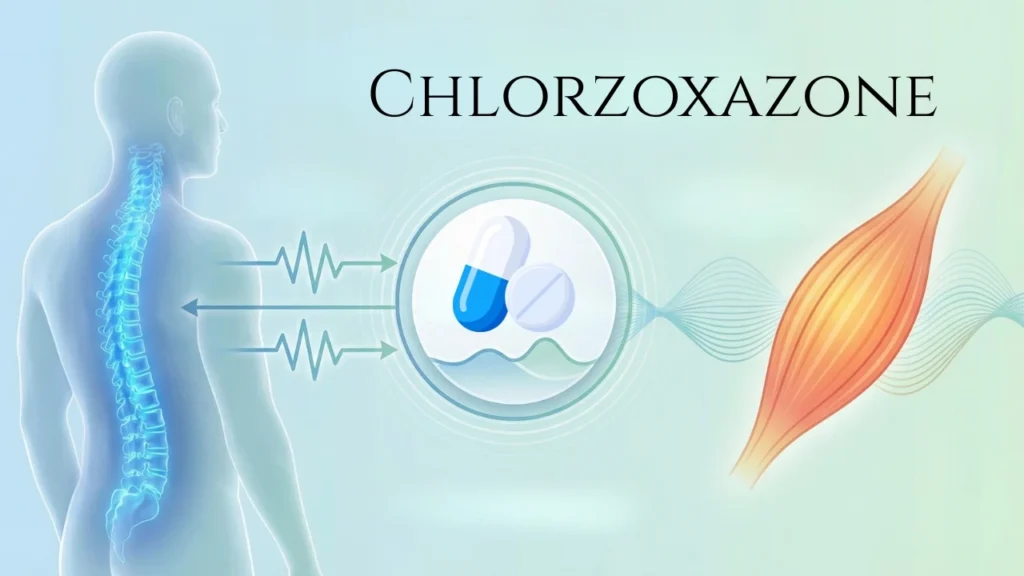
Chlorzoxazone is a prescription medicine that helps relax tight, painful muscles. When you have muscle spasms from an injury or strain, this skeletal muscle relaxant works through your brain and spinal cord to calm down the signals that make muscles tighten up. It helps break the pain cycle so you can move more easily. Doctors usually prescribe it along with rest and physical therapy for quick relief during the first few days of muscle pain.
What is Chlorzoxazone?
Chlorzoxazone belongs to a group of medicines known as centrally acting muscle relaxants. Unlike creams or ointments you rub on sore areas, this CNS medication works from inside your body by calming down your nervous system.
When you pull a muscle, strain your back, or hurt your neck, your body sometimes keeps those muscles tight even after the injury starts healing. This creates a painful cycle where spasms lead to more pain, which causes more spasms. Chlorzoxazone helps stop this cycle by working on your spinal cord and brain to reduce the signals that keep muscles locked up.
Doctors prescribe it specifically for musculoskeletal pain that comes from sudden injuries, not for long-term conditions. It’s meant to give you relief during the first few difficult days or weeks after an injury, making it easier to rest properly and do gentle exercises that help healing. This medicine works best when combined with physical therapy and proper rest, not as a solution by itself.
How Chlorzoxazone Works in the Body
Chlorzoxazone doesn’t go directly to your sore muscles to relax them. Instead, it travels through your bloodstream to your central nervous system, where it acts on specific areas of your spinal cord and deeper parts of your brain.
Think of your nervous system like an electrical circuit that controls muscle contraction. When you injure a muscle, these circuits can get stuck in an “on” position, sending constant signals that keep muscles tight and contracted. Chlorzoxazone works by blocking these overactive nerve pathways, particularly the multisynaptic reflex arcs that run through your spine.
By reducing spinal reflex activity, the medicine helps muscles receive fewer “tighten up” messages from your nervous system. This is especially helpful because injured muscles often get trapped in what doctors call the pain-spasm cycle. Here’s how this cycle normally works:
- Your injury causes pain and inflammation in the muscle.
- Your nervous system responds by tightening the muscle to protect the hurt area.
- The tight muscle becomes more painful because blood flow is restricted.
- More pain triggers even stronger muscle contraction.
- The cycle keeps repeating and getting worse.
Chlorzoxazone breaks this loop by calming the spinal reflexes that keep muscles locked in contraction, giving your body a chance to heal naturally.
Medical Uses of Chlorzoxazone
- Acute muscle spasm treatment: Doctors prescribe this medicine when sudden muscle tightness makes movement painful or difficult, helping you regain normal function faster during the recovery period.
- Back pain from strains or sprains: Whether you lifted something heavy incorrectly or twisted your lower back awkwardly, chlorzoxazone helps ease the intense muscle spasms that often accompany back injuries and make simple activities like standing or walking extremely uncomfortable.
- Neck injury and stiffness: Whiplash from car accidents, sleeping in awkward positions, or sports-related neck strains can cause severe muscle contractions that limit head movement and create sharp pain when turning or looking up and down.
- Support during rehabilitation therapy: Physical therapists often work with patients taking this medicine because reduced muscle spasms allow people to participate more actively in stretching exercises, gentle movements, and other therapeutic activities that speed up healing.
- Short-term musculoskeletal conditions: This medication is specifically designed for temporary use during the early healing phase after muscle injuries, not for managing chronic or long-lasting muscle problems that need different treatment approaches.
The medicine works alongside rest and proper care, not as a replacement for addressing the actual injury causing your discomfort.
Benefits of Chlorzoxazone
- Muscle relaxation therapy that targets the root cause: By calming overactive nerve signals in your spinal cord, the medicine helps release involuntary muscle tightness that keeps you locked in painful positions, allowing your body to naturally relax tense muscle groups.
- Mobility improvement during recovery: When muscle spasms decrease, you’ll notice it becomes easier to bend, twist, reach, and perform daily movements that felt impossible before starting treatment, helping you return to normal activities sooner.
- Pain relief support through reduced tension: While chlorzoxazone isn’t a painkiller itself, loosening tight muscles indirectly reduces the aching and sharp sensations caused by constant muscle contraction, making you more comfortable throughout the day.
- Better participation in rehabilitation: With less stiffness holding you back, you can actively engage in physical therapy exercises, stretching routines, and gradual strengthening movements that your therapist recommends for complete healing.
- Faster break from the pain-spasm cycle: The medicine helps stop the repeating loop where pain causes tightness and tightness causes more pain, giving your muscles the break they need to start genuine recovery.
How Long Chlorzoxazone Takes to Work
Most people start feeling relief within the first hour after taking chlorzoxazone, with the onset of action typically happening around 60 minutes as the medicine reaches your bloodstream and central nervous system. The muscle-relaxing effects reach their strongest point about one to two hours after you swallow the tablet, when the drug concentration in your blood is at its peak.
The duration of effect usually lasts between three to four hours, which is why doctors often prescribe it multiple times throughout the day to maintain steady relief. The medicine has a short half-life of approximately 60 minutes, meaning your body processes and eliminates it fairly quickly through your liver and kidneys.
Within five to six hours after your last dose, most of the medication will have left your system completely, though the therapeutic benefits on muscle relaxation may continue slightly longer as your pain-spasm cycle remains broken.
Dosage Overview
Chlorzoxazone comes in different tablet strengths, and your doctor will choose the right dose based on how severe your muscle spasms are and how your body responds to treatment. Most adults start with a moderate dose taken several times throughout the day since the medicine works for only a few hours at a time.
This is strictly a short-term treatment medication, typically prescribed for one to four weeks during the acute phase of muscle injury when pain and tightness are at their worst. As your condition improves and movement becomes easier, your doctor will usually lower your dose gradually to the smallest amount that still controls your symptoms.
Medical supervision is essential because only your healthcare provider can determine the safest dosage guidance for your specific situation, considering your age, liver health, other medications you take, and any medical conditions you have. Never adjust the dose yourself or take it more frequently than prescribed, even if you feel the effects wearing off between doses.
| Strength | Notes |
|---|---|
| 250 mg | Common starting dose for mild spasms |
| 375 mg | May increase to 2 tablets if needed |
| 500 mg | Standard adult dose for moderate pain |
| 750 mg | Can start with partial tablet and adjust |
Common Side Effects
- Drowsiness and sleepiness: This is the most frequent side effect people experience because the medicine slows down your central nervous system to relax muscles, which naturally makes you feel tired, sluggish, or ready to nap during the day.
- Dizziness and lightheadedness: You might feel unsteady on your feet, experience a spinning sensation when standing up quickly, or feel like the room is moving, especially during the first few days of treatment as your body adjusts to the medication.
- Nausea and stomach upset: Some people feel queasy, lose their appetite, or experience mild discomfort in their stomach after taking the tablets, though eating a small snack with the medicine often helps reduce this reaction.
- Fatigue and general weakness: Beyond just feeling sleepy, you might notice an overall sense of being run-down, lacking energy for normal activities, or feeling like your body is heavier and harder to move than usual.
- Malaise: A vague feeling of being unwell or “off” without a specific symptom you can point to, similar to the early stages of catching a cold.
These effects usually lessen as your body gets used to the medicine and typically aren’t serious enough to stop treatment.
Serious Side Effects and Safety Warnings
While chlorzoxazone helps many people safely, the most serious concern is rare but potentially life-threatening liver toxicity that can develop unpredictably in some individuals. This liver injury happens without warning and doctors don’t yet understand why certain people experience it while others don’t.
The damage can progress quickly and become severe, which is why recognizing early warning signs is critically important for your safety. Allergic reactions, though uncommon, can also occur and range from mild skin rashes to dangerous breathing problems that need emergency care. If you’re taking this medicine, stay alert for any unusual changes in how you feel.
Contact your doctor immediately if you notice:
- Jaundice: Your skin or the whites of your eyes turning yellow, indicating your liver isn’t processing waste properly.
- Dark urine: Tea-colored or brown urine that’s distinctly different from the harmless orange-red color the medicine sometimes causes.
- Severe stomach pain: Especially pain in the upper right side of your belly where your liver sits.
- Unexplained fever, rash, or extreme tiredness: These can signal your body is having a serious reaction.
- Skin reactions: Hives, itching, swelling of your face or throat, or difficulty breathing suggesting a severe allergic reaction.
Never ignore these symptoms or wait to see if they improve on their own.
Precautions Before Using Chlorzoxazone
- Liver disease history: Never take this medicine if you have active liver problems, hepatitis, or have experienced liver damage from chlorzoxazone before, as it processes through your liver and could cause severe complications or complete liver failure in people with existing damage.
- Alcohol interaction and consumption: Avoid drinking beer, wine, or spirits while on this medication because alcohol interaction dramatically increases drowsiness, impairs your judgment dangerously, and significantly raises your risk of developing serious liver toxicity that could be fatal.
- Driving safety and operating machinery: Do not drive cars, ride motorcycles, use power tools, or operate heavy equipment until you know exactly how the medicine affects you, since the drowsiness and dizziness can severely slow your reaction time and coordination.
- Drug allergies and sensitivities: Tell your doctor if you’ve had allergic reactions to any medications in the past, including rashes, breathing problems, or swelling, as you may be more likely to react to chlorzoxazone as well.
- Existing medications and supplements: Share your complete list of current medicines, including prescriptions, over-the-counter drugs, herbal remedies, and vitamins, because chlorzoxazone can dangerously interact with sedatives, painkillers, sleep aids, and certain antidepressants.
Drug Interactions
Chlorzoxazone can cause dangerous interactions when combined with other substances that slow down your central nervous system, leading to extreme drowsiness, breathing difficulties, or even life-threatening complications.
These CNS depressants add to the sedating effects of chlorzoxazone, creating a compound effect where your brain and body functions slow down too much. The risks multiply when you take multiple sedating medications together, which is why your doctor needs to know about everything you’re consuming, including alcohol and over-the-counter sleep aids.
Some combinations can also increase the chance of liver damage or make side effects much more intense than they would be with chlorzoxazone alone.
| Drug Type | Risk | Advice |
|---|---|---|
| Alcohol (beer, wine, spirits) | Extreme sedation, increased liver damage risk, dangerous impairment | Avoid completely or limit strictly as directed |
| Opioids (hydrocodone, codeine, tramadol) | Severe drowsiness, slowed breathing, respiratory depression | Use only if prescribed together with close monitoring |
| Sedatives and sleep medicines (zolpidem, temazepam) | Profound sleepiness, loss of coordination, excessive CNS depression | Doctor may adjust doses or choose alternatives |
| Benzodiazepines (alprazolam, diazepam, lorazepam) | Intense drowsiness, confusion, fall risk, memory problems | Combine only under strict medical supervision |
| Antihistamines (diphenhydramine, cetirizine) | Increased sleepiness, dry mouth, difficulty concentrating | Choose non-drowsy versions when possible |
Conclusion
Chlorzoxazone offers effective short-term relief from painful muscle spasms when used correctly under medical guidance. While it helps break the pain-spasm cycle and supports your recovery from musculoskeletal injuries, safe medication use requires following your doctor’s dosage instructions carefully and watching for serious side effects like liver problems.
Always attend follow-up appointments, avoid alcohol completely, and never share this prescription with others. If you have questions about your treatment or experience unusual symptoms, contact your healthcare provider immediately for doctor consultation rather than adjusting doses on your own. This medicine works best as part of a complete recovery plan that includes rest and physical therapy.
FAQs
Q1: Is Chlorzoxazone safe for long-term use?
Ans: No, chlorzoxazone is designed only for short-term use, typically one to four weeks. Long-term use increases the risk of liver damage and isn’t necessary since it’s meant for acute muscle injuries that heal within a few weeks.
Q2: Can I drive after taking it?
Ans: No, avoid driving or operating machinery until you know how the medicine affects you. Chlorzoxazone causes drowsiness and dizziness that can slow your reaction time and impair your coordination dangerously.
Q3: Can it be taken with painkillers?
Ans: Yes, doctors often prescribe it alongside pain medicines like ibuprofen or acetaminophen for better relief. However, always check with your doctor first to ensure the combination is safe for your specific health situation.
Q4: When should I stop using it?
Ans: Stop immediately if you develop yellow skin or eyes, dark urine, severe stomach pain, or signs of allergic reaction. Otherwise, your doctor will tell you when to reduce the dose as your muscle spasms improve and eventually stop treatment completely.