

Cefixime is a type of antibiotic that doctors prescribe only for bacterial infections. It belongs to a group of medicines that stop harmful bacteria from multiplying inside the body. Doctors often choose it when specific germs are known to respond well to this medicine.
Part of the Third-Generation Cephalosporin Class
Cefixime falls under the third-generation cephalosporin family. Medicines in this class are made to target a wider range of bacteria, especially those that older antibiotics may not work well against. This classification also signals that people with serious allergies to penicillin or other cephalosporins must be careful.
How Cefixime Works Inside the Body
Cefixime works by interfering with the internal machinery that bacteria need to survive. It blocks specific bacterial enzymes that are essential for DNA replication. When this mechanism stops, the bacteria cannot grow or multiply, and the infection becomes easier for the body to control.
It Acts as a Bactericidal Antibiotic
Cefixime is known as a bactericidal antibiotic. This means it does not just slow down bacteria—it actively kills them by damaging the structures they require for growth. This action makes it effective for certain respiratory, urinary, and typhoid-related infections when the organism is sensitive to the drug.
A Prescription-Only Medicine
Cefixime should only be used under a doctor’s supervision. It is not meant for self-medication or casual symptom relief. Using it without proper guidance can lead to incorrect treatment, severe side effects, or antibiotic resistance, especially in places where misuse is common. Doctors also review medical history—such as kidney issues or past allergies—before prescribing it.
What Cefixime Is Used For
Respiratory Infections
Doctors prescribe Cefixime for certain bacterial throat and breathing infections. It can help in conditions like pharyngitis, tonsillitis, flare-ups of bronchitis, and some sinus infections when the responsible bacteria respond to this medicine. It is useful especially when common respiratory germs such as Streptococcus pyogenes, Haemophilus influenzae, or Moraxella catarrhalis are involved.
Ear Infections
Cefixime is also used for middle-ear infections, especially in children. These infections are commonly caused by bacteria like H. influenzae and M. catarrhalis, and Cefixime helps control them effectively when they are sensitive to the medicine.
Urinary Tract Infections (UTI)
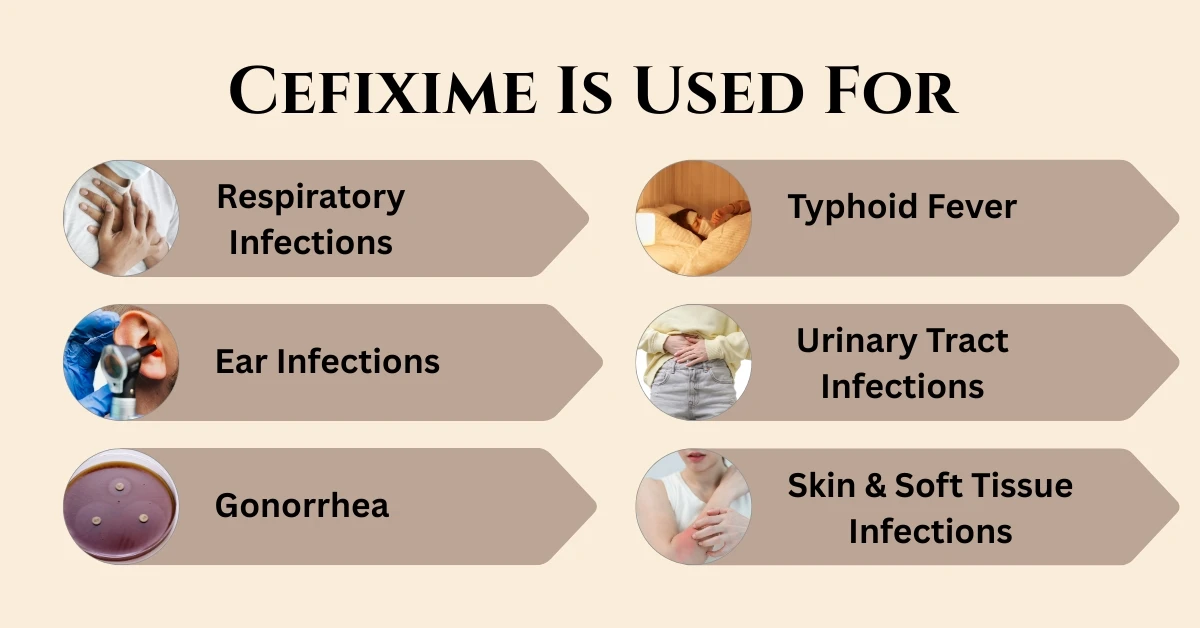
Doctors often choose Cefixime for uncomplicated UTIs caused by bacteria such as E. coli and Proteus mirabilis. These germs are common triggers of urinary infections, and Cefixime works when the bacteria are known to be responsive to this antibiotic.
Gonorrhea (Uncomplicated Cases)
Cefixime may be prescribed for uncomplicated cervical or urethral gonorrhea. It helps clear the infection caused by Neisseria gonorrhoeae when resistance levels are low. However, doctors avoid using it for throat-site (pharyngeal) gonorrhea because success rates are lower, and other treatments work better there.
Typhoid Fever (India-Specific Use)
In India, Cefixime is widely used for typhoid fever in outpatient treatment. Both ICMR and NCDC guidelines recognize it as a suitable option, especially for mild-to-moderate cases that can be managed outside the hospital. It is commonly preferred for children because it is easier to give as a syrup and has a safe profile when used correctly.
Skin & Soft Tissue Infections
Cefixime can also help with skin and soft-tissue infections caused by certain streptococcal bacteria. Doctors choose it when the infection is mild to moderate and when tests or clinical signs suggest that the bacteria involved respond to this antibiotic.
What Cefixime Does NOT Work For
Viral Infections (Most Important)
Cefixime cannot treat viral illnesses, because antibiotics only work on bacteria. It does not help with the common cold, seasonal flu, or COVID-19. Using it for these conditions offers no benefit and can increase the risk of antibiotic resistance, which makes future bacterial infections harder to treat.
Resistant Bacterial Infections
Some bacteria are naturally strong or have developed resistance over time. Cefixime does not work against:
- MRSA (Methicillin-Resistant Staphylococcus aureus)
- VRE (Vancomycin-Resistant Enterococci)
- ESBL-producing bacteria
These organisms require different, more targeted antibiotics. Using Cefixime for them can delay proper treatment and worsen the infection.
Pseudomonas, Acinetobacter, and Atypical Bacteria
Cefixime also does not work well against certain hard-to-treat germs like Pseudomonas aeruginosa and Acinetobacter baumannii, which show very high resistance, especially in India. It is similarly ineffective against atypical bacteria such as Mycoplasma and Legionella. These infections need different antibiotic classes to improve.
Severe Infections That Need IV Antibiotics
In moderate to severe infections, Cefixime may not be strong enough. Conditions that need fast and high-level antibiotic action typically require IV (injectable) medicines like Ceftriaxone instead of Cefixime. Examples include:
- Complicated or severe respiratory infections
- Difficult UTI cases
- Serious gastrointestinal infections
- Pharyngeal gonorrhea, where cure rates with Cefixime are lower
Doctors choose IV antibiotics in these cases because they reach higher blood levels quickly and provide more reliable results.
Cefixime Dosage Guide (General Doctor-Direction Only)
Doctors decide the dose of Cefixime based on the patient’s age, weight, kidney health, and the type of infection. The points below explain how dosing generally works for different groups, without mentioning exact milligram amounts. Always follow the dose your doctor gives—changing it on your own can lead to poor results or serious side effects.
Cefixime Dosing Overview Table
| Patient Group | How Doctors Decide the Dose | Important Notes |
|---|---|---|
| Adults | Dose is given once daily or divided into two doses based on the infection and overall health. | Stick to the prescribed timing; do not adjust on your own. |
| Children (Weight-Based) | Dose is calculated using the child’s body weight. Younger kids often receive dry syrup. | Never guess the dose; infants under 6 months need special medical supervision. |
| Elderly (Geriatric) | Same general pattern as adults, but doctors monitor kidney function, overall strength, and other illnesses. | Kidney performance may be lower, so dose timing may be adjusted. |
| Renal Impairment (Kidney Problems) | Dose is reduced or spaced out because the body cannot clear the drug as fast. | Incorrect dosing can lead to drug buildup, causing confusion or seizures—urgent medical attention needed. |
Who Should NOT Take Cefixime?
Supporting Points (Bullet Format)
- Some people must avoid Cefixime entirely, while others should take it only under strict doctor supervision.
- Doctors review your allergies, kidney health, gut conditions, and neurological history before deciding if Cefixime is safe.
- Using Cefixime without proper evaluation can worsen existing illnesses, cause severe allergic reactions, or trigger dangerous side effects.
- These risks make it important to follow professional medical advice instead of self-medicating.
Side Effects of Cefixime
Cefixime is generally well-tolerated, but like all antibiotics, it can cause side effects in some people. Most effects are mild and settle on their own, but a few can be serious and need quick medical attention. Knowing the warning signs helps you use this medicine safely and avoid complications.
Common Side Effects
These are usually mild and temporary. They often improve as the body adjusts to the medicine.
- Nausea or stomach discomfort
- Loose stools or diarrhea
- Gas or indigestion
- Headache
These effects typically do not require medical care unless they become persistent or unusually strong.
Serious Side Effects
These are uncommon but important because they may signal a harmful reaction. If any of these appear, stop the medicine and contact a doctor immediately.
Allergic reactions
- Signs: swelling of the face/lips, difficulty breathing, tight throat, hives, or sudden rash.
C. difficile–associated diarrhea
- Severe, watery, or bloody diarrhea that can appear during treatment or even weeks after finishing the course.
Liver issues
- Symptoms may include yellowing of skin/eyes, dark urine, pale stools, or strong upper-belly pain.
Kidney problems
- Reduced urination, swelling of legs/feet, or unusual tiredness.
Seizures or confusion
- Higher risk if the dose is not adjusted for kidney disease.
When to Seek Emergency Help
- Trouble breathing, swelling of the face or throat, or rapid spreading rash
- Severe diarrhea that does not stop, especially if bloody
- Sudden yellowing of the eyes or skin
- Sharp or persistent stomach pain
- Unusual sleepiness, confusion, or any seizure-like activity
- Very little or no urine output
- Sudden weakness, dizziness, or fainting
These symptoms can point to serious complications such as anaphylaxis, severe colitis, liver injury, or kidney failure. Immediate attention helps prevent serious harm.
Cefixime Interactions (Drug & Disease)
Cefixime can interact with certain medicines and health conditions. These interactions may reduce the medicine’s effectiveness or increase the risk of side effects. Doctors review all ongoing treatments and medical history before prescribing it to ensure the antibiotic remains safe and effective.
Drug Interactions
Some medicines can change how Cefixime works or increase the chance of reactions. Inform your doctor about all medications you take, including over-the-counter drugs.
Warfarin: Cefixime may increase the effect of blood thinners like Warfarin, raising the risk of bleeding. Monitoring of clotting levels may be required.
Probenecid: This medicine can slow the removal of Cefixime from the body, causing higher levels of the antibiotic in the bloodstream. Doctors may adjust dosing when both are used together.
Carbamazepine: Interaction is possible and may affect how the body processes medicines for seizure control. Close monitoring is recommended if both are taken at the same time.
Live vaccines (such as cholera, typhoid, or BCG): Cefixime may interfere with how live vaccines work. Doctors usually avoid giving live vaccines during antibiotic treatment.
Disease Interactions
Certain health conditions can change how safe Cefixime is. People with the following conditions require extra caution and medical supervision:
- Renal dysfunction (Kidney problems): The body cannot clear Cefixime effectively, causing drug buildup. This increases the risk of serious effects like confusion or seizures if the dose is not adjusted.
- Liver disease: Liver problems can make it harder to process medicines. Doctors monitor symptoms such as yellowing of the skin or dark urine if Cefixime is prescribed.
- Colitis: Cefixime can worsen intestinal inflammation and may trigger or intensify severe diarrhea, including C. difficile–related colitis. Patients with active colitis need careful evaluation.
- Seizure disorders: People with epilepsy or a seizure history may experience increased neurological sensitivity. If Cefixime levels rise (especially due to kidney issues), seizures can occur. Doctors monitor closely in such cases.
Medical Disclaimer
This article is for information only and does not replace medical advice. Cefixime is a prescription medicine, and you should use it only under a doctor’s guidance. Do not self-medicate. If you have symptoms, medical conditions, or experience severe reactions, consult a healthcare professional immediately.
FAQs
Q1: Does Cefixime work fast?
Ans: Most people start feeling better within a few days, depending on the type of infection. Improvement is gradual as the bacteria are controlled.
Q2: Is it safe in pregnancy?
Ans: Cefixime is generally considered safe (Category B), but it should be used only if a doctor recommends it after assessing benefits and risks.
Q3: Can I take it with milk?
Ans: Milk does not prevent Cefixime from working, but doctors often suggest taking it with food to reduce stomach discomfort.
Q4: Does it work for viral fever?
Ans: No, Cefixime does not work for viral illnesses like cold, flu, or viral fever. It only treats bacterial infections.
Q5: What if symptoms don’t improve?
Ans: If your symptoms don’t improve or worsen, contact your doctor—there may be resistance, a different infection, or a need to change treatment.
Q6: How long does it stay in the body?
Ans: Cefixime’s half-life is around 3–4 hours, but the effects last longer because the drug continues working as it clears through the kidneys.