
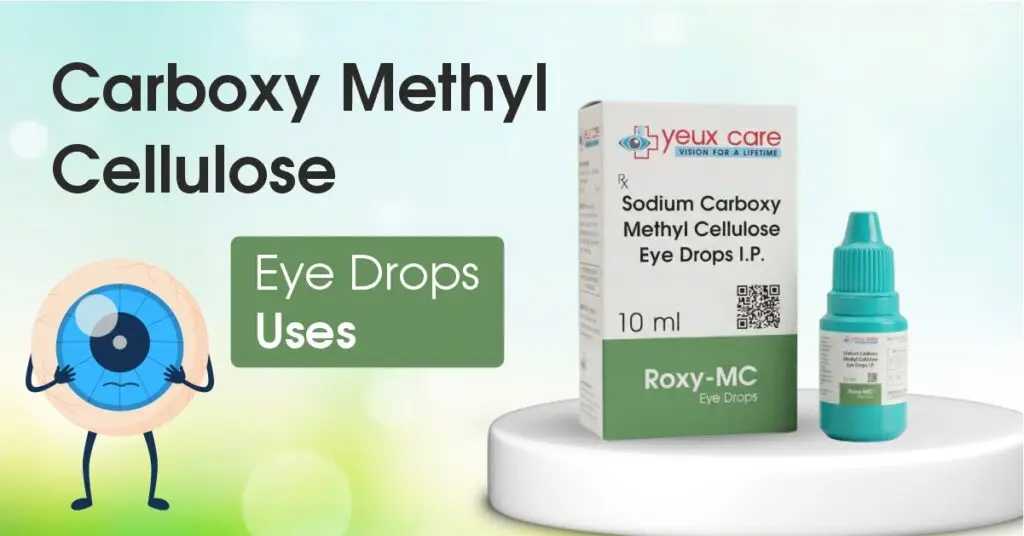
Dry, irritated eyes are more common than ever? Explore Carboxymethylcellulose eye drops uses. Whether it is long hours in front of a screen, exposure to air-conditioned environments, or age-related changes, millions of people across India and worldwide struggle with ocular dryness every single day. Carboxymethylcellulose (CMC) eye drops have emerged as one of the most trusted and clinically recommended solutions for this widespread problem.
This article provides a comprehensive, medically accurate overview of carboxymethylcellulose eye drops — what they are, how they work, their key clinical uses, and why they matter to healthcare providers, pharma distributors, and franchise partners looking to add high-quality ophthalmic products to their portfolio.
📌 Quick Answer: Carboxymethylcellulose (CMC) eye drops are lubricating eye drops used primarily to relieve dry eye symptoms. They mimic natural tears, provide immediate moisture and comfort, and are safe for regular use when advised by a healthcare professional.
What Is Carboxymethylcellulose? A Simple Explanation
Carboxymethylcellulose sodium (CMC-Na) is a water-soluble polymer derived from cellulose — the natural structural compound found in plant cell walls. In pharmaceutical ophthalmic formulations, CMC is used as a viscosity-enhancing agent and lubricant.
When formulated as eye drops, CMC creates a thin, stable film over the ocular surface. This film closely mimics the mucin and aqueous layers of natural human tears. As a result, CMC eye drops are widely classified as artificial tears or lubricating eye drops.
🔬 Pharmacological Class: Carboxymethylcellulose belongs to the class of ophthalmic lubricants and artificial tear substitutes. Common concentrations used in clinical formulations range from 0.5% to 1.0%.
Carboxymethylcellulose Eye Drops: Primary Uses and Clinical Applications
CMC eye drops serve a broad range of therapeutic and supportive purposes in ophthalmology. Below are the key clinical uses:
1. Dry Eye Syndrome (Keratoconjunctivitis Sicca)
Dry eye syndrome (DES) is the primary indication for CMC eye drops. It occurs when the eyes fail to produce sufficient tears or when tears evaporate too quickly. Symptoms include burning, stinging, a sandy or gritty sensation, redness, and occasional blurred vision.
CMC eye drops supplement the natural tear film, providing immediate symptomatic relief. Their high water-retention capacity ensures prolonged hydration on the ocular surface, reducing the frequency of discomfort episodes.
2. Computer Vision Syndrome and Digital Eye Strain
Modern work habits have made screen-related eye fatigue a major public health concern. Prolonged screen time significantly reduces the blink rate, causing tear film instability. CMC eye drops help restore tear film integrity and provide prompt relief from digital eye strain symptoms.
3. Post-Operative Ocular Lubrication
Following procedures such as LASIK, cataract surgery, or PRK (photorefractive keratectomy), corneal sensitivity is temporarily reduced and tear production may be impaired. CMC eye drops are frequently prescribed in the post-operative period to protect the corneal surface and accelerate healing.
4. Contact Lens-Associated Dryness
Extended contact lens wear can disrupt the normal tear film and lead to discomfort, redness, and temporary blurred vision. Preservative-free CMC formulations are particularly well-suited for lens wearers as they minimize the risk of hypersensitivity reactions associated with preservative-containing products.
5. Environmental and Allergic Irritation
Exposure to smoke, dust, wind, air conditioning, or low-humidity environments can trigger temporary ocular dryness and irritation. CMC eye drops form a protective barrier over the corneal epithelium, reducing environmental damage and soothing irritated surfaces.
6. Adjunctive Support in Ocular Surface Disorders
In patients with conditions such as blepharitis, meibomian gland dysfunction, or exposure keratopathy, CMC eye drops serve as a supportive treatment alongside primary therapeutic agents. They help maintain ocular surface health and reduce symptomatic burden.
Carboxymethylcellulose Eye Drops: Uses at a Glance
| Clinical Condition | How CMC Helps | Patient Group |
| Dry Eye Syndrome | Lubricates & stabilises tear film | All ages |
| Digital Eye Strain | Restores blink-interval hydration | IT professionals, students |
| Post-Surgical Recovery | Protects corneal epithelium | LASIK / cataract patients |
| Contact Lens Dryness | Reduces lens friction & discomfort | Lens wearers |
| Environmental Irritation | Forms protective barrier | Outdoor & travel population |
| Ocular Surface Disorders | Adjunct support & symptom relief | Blepharitis, MGD patients |
How Carboxymethylcellulose Eye Drops Work
Understanding the mechanism of action of CMC eye drops helps both healthcare professionals and patients appreciate why they are so effective.
- Viscosity Enhancement: CMC increases the viscosity of the tear film, slowing its evaporation and prolonging ocular surface coverage.
- Mucoadhesion: The polymer chains in CMC adhere to the glycoprotein mucins present on the ocular surface, improving retention time compared to simple saline solutions.
- Osmotic Balance: Properly formulated CMC drops maintain isotonicity with natural tears, preventing cellular stress to corneal and conjunctival epithelial cells.
- Film Stability: By filling gaps in the mucin and aqueous tear layers, CMC helps stabilise the entire tear film structure, improving tear break-up time (TBUT).
💡 Key Insight for Clinicians: Tear Break-Up Time (TBUT) is a standard clinical metric for assessing dry eye severity. CMC formulations have demonstrated measurable improvement in TBUT in multiple clinical studies, supporting their efficacy as lubricating agents.
CMC Eye Drops vs. Other Artificial Tears: A Comparison
The ophthalmic lubricant market includes several active ingredients. Here is how CMC compares to common alternatives:
| Feature | CMC (Carboxymethylcellulose) | Hypromellose (HPMC) | Sodium Hyaluronate |
| Mechanism | Viscosity + mucoadhesion | Viscosity enhancement | Water retention + viscoelastic |
| Retention Time | Moderate-to-long | Moderate | Long |
| Preservative-Free Option | Yes | Yes | Yes |
| Lens Compatibility | Yes (preservative-free) | Yes | Yes |
| Cost Accessibility | High (cost-effective) | High | Moderate-to-high |
| Clinical Evidence | Extensive | Good | Extensive |
CMC remains the gold standard in affordable, widely accessible ocular lubrication with an excellent safety and efficacy profile backed by decades of clinical use.
Safety Profile and Precautions
Carboxymethylcellulose eye drops have a well-established safety profile when used as directed by a qualified healthcare professional. Key considerations include:
- Preservatives: Benzalkonium chloride (BAK) is a common preservative in multi-dose ophthalmic formulations. In patients with sensitive eyes or those using drops very frequently, preservative-free single-unit dose formats are generally preferred.
- Hypersensitivity: True allergic reactions to CMC are rare. However, any signs of increased redness, swelling, or itching following instillation should be reported to a physician promptly.
- Transient Blurring: Mild, brief blurring of vision immediately after instillation is a normal property of viscous formulations and typically resolves within a few minutes.
- Use in Special Populations: Patients who are pregnant, breastfeeding, or have coexisting ocular conditions should use CMC eye drops only under medical supervision.
- Interactions: CMC eye drops are generally compatible with topical antiglaucoma and antibiotic drops. When using multiple topical ophthalmic agents, a minimum 5-minute interval between instillations is recommended.
⚠️ Disclaimer: This article is intended for educational and informational purposes only. It does not constitute medical advice, replace professional consultation, or promote self-medication. Always consult a licensed healthcare provider before initiating any eye care treatment.
CMC Eye Drops as a Pharma Franchise Opportunity in India
For pharma distributors, medical representatives, and PCD pharma franchise partners, ophthalmic products represent one of the fastest-growing therapeutic categories in the Indian pharmaceutical market. The ophthalmic segment in India is projected to grow steadily, driven by:
- Rising prevalence of dry eye disease, particularly among the urban and semi-urban working population.
- Increasing screen time across all age groups due to remote work, online education, and digital entertainment.
- Greater awareness about eye health and increased access to ophthalmology services.
- Expanding geriatric population with age-related tear film dysfunction.
- Growing demand for quality ophthalmic products from Tier 2 and Tier 3 cities.
Carboxymethylcellulose-based lubricant eye drops are essential components of any well-rounded ophthalmic product range. Their OTC-friendly profile, high patient adherence, and repeat-prescription nature make them commercially attractive for franchise partners.
📦 Rosette Pharma’s Ophthalmic Range: Rosette Pharma offers CMC-based lubricant eye drops under its flagship ophthalmic brand. Products are manufactured at WHO-GMP certified facilities and are DCGI approved. Franchise partners benefit from monopoly rights, promotional support, and competitive pricing.
Roxy-MC by Rosette Pharma: Quality CMC Eye Drops for Every Practice
Rosette Pharma’s Roxy-MC is a carboxymethylcellulose-based lubricant eye drop formulated to deliver effective, consistent relief from dry eye symptoms. Manufactured under strict WHO-GMP guidelines at our DCGI-approved facility in Karnal, Haryana, Roxy-MC is designed to meet the quality expectations of ophthalmologists, general practitioners, and their patients alike.
- Active Ingredient: Carboxymethylcellulose Sodium (CMC-Na)
- Formulation: Sterile, buffered ophthalmic solution
- Indication: Dry eye syndrome, ocular surface lubrication, post-operative eye care
- Manufacturing Standard: WHO-GMP Certified | DCGI Approved
- Available For: PCD Pharma Franchise | Institutional Supply | Trade Distribution
For complete product details, composition, and packaging specifications, visit the Roxy-MC product page at rosettepharma.com/product/roxy-mc/
Frequently Asked Questions (FAQ)
Q1. What are carboxymethylcellulose eye drops used for?
Carboxymethylcellulose (CMC) eye drops are used primarily to relieve dry eye syndrome. They act as artificial tears by lubricating the ocular surface, stabilising the tear film, and providing symptomatic relief from dryness, burning, and irritation. They are also used post-operatively, for contact lens dryness, and for environmental eye irritation.
Q2. How often should CMC eye drops be used?
The frequency of use depends on the severity of symptoms and the prescribing physician’s recommendation. For mild to moderate dry eye, one to two drops in the affected eye(s), one to four times daily, is a common starting point. Preservative-free formulations may be used more frequently if required. Patients should always follow their doctor’s guidance.
Q3. Are CMC eye drops safe for long-term use?
Yes, carboxymethylcellulose eye drops are generally considered safe for long-term use, particularly preservative-free formulations. Multi-dose preserved formulations are also well-tolerated for regular use. Patients on long-term therapy should have periodic reviews with their ophthalmologist to assess treatment response.
Q4. Can CMC eye drops be used with contact lenses?
Preservative-free CMC eye drops are generally compatible with contact lens use. However, if the formulation contains benzalkonium chloride (BAK) as a preservative, it is advisable to remove contact lenses before instillation and wait at least 15 minutes before reinserting them. Always check the product labelling and consult an eye care professional.
Q5. What is the difference between 0.5% and 1.0% CMC eye drops?
The concentration of CMC affects the viscosity and retention time of the formulation. A 0.5% CMC solution offers lighter lubrication and is suitable for mild to moderate dryness. A 1.0% CMC solution provides greater viscosity, longer retention, and more sustained lubrication, making it preferable for moderate to severe dry eye presentations. The appropriate concentration should be selected by a healthcare professional.
Q6. Where can pharma distributors and franchise partners source CMC eye drops?
Rosette Pharma offers WHO-GMP certified, DCGI-approved CMC-based lubricant eye drops through its PCD pharma franchise model. Distributors and franchise partners across India can connect with the Rosette Pharma team via rosettepharma.com/contact-us/ to discuss product availability, pricing, monopoly rights, and franchise terms.
Partner with Rosette Pharma for Quality Ophthalmic Products
Are you a pharma distributor, medical representative, or franchise company looking to expand your ophthalmic product portfolio with proven, WHO-GMP certified formulations?
Rosette Pharma invites pharma business partners to explore our complete ophthalmic range — including Roxy-MC (CMC Eye Drops) — manufactured at our DCGI-approved, WHO-GMP certified facility in Karnal, Haryana.
✅ PCD Pharma Franchise with Monopoly Rights ✅ Competitive Pricing & Promotional Support
✅ DCGI Approved | WHO-GMP Certified ✅ Pan-India Distribution Network
🌐 Visit: Contact Us | Explore Products:All Products| Roxy-MC: ROXY MC