
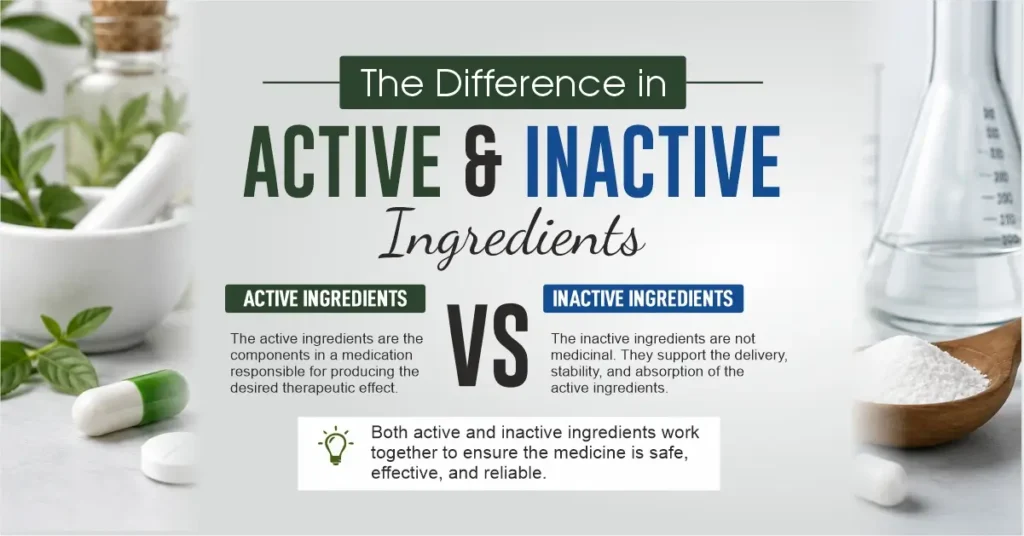
When you pick up a strip of tablets or a bottle of syrup, the label rarely tells the whole story of what’s actually inside. Every pharmaceutical product is built from more than just the one component responsible for treating the condition it’s meant for. Alongside that key substance, manufacturers combine several other materials that help the product take shape, stay stable, and reach the body the way it’s intended to.
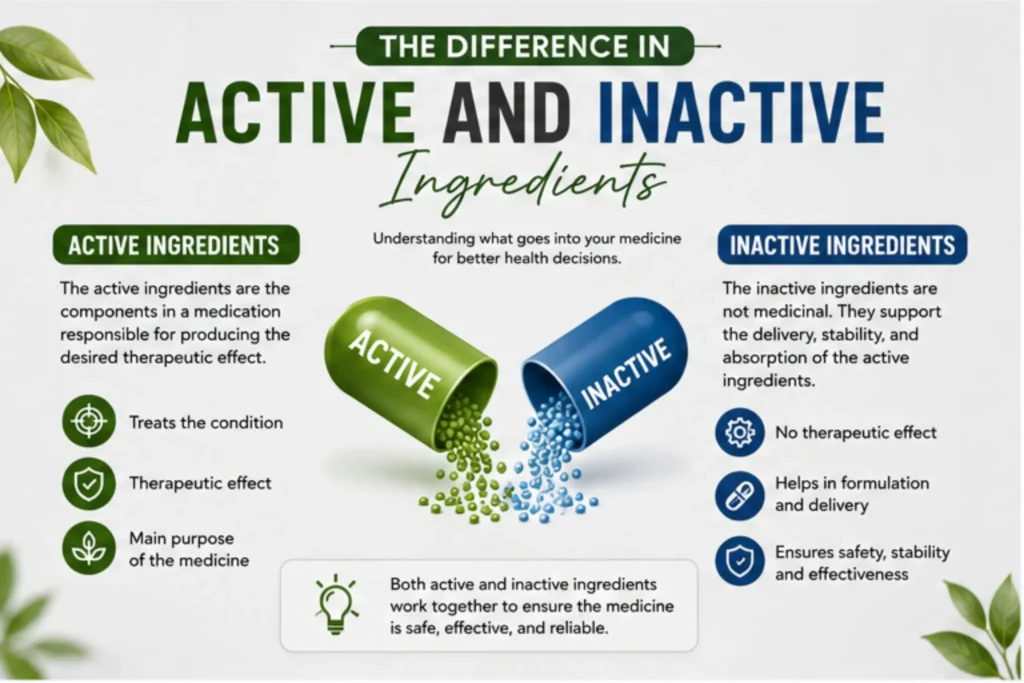
This is where the distinction between active ingredients and inactive ingredients comes in — a fundamental concept in pharmaceutical formulation that’s often misunderstood. Understanding active and inactive ingredients helps patients read labels with more confidence, helps pharmacists and medical representatives explain products clearly, and helps pharma franchise owners and distributors understand what actually goes into the products they sell. One important clarification upfront: “inactive” does not mean “unnecessary.” Every ingredient in a properly formulated medicine has a defined purpose.
What Is an Active Ingredient?
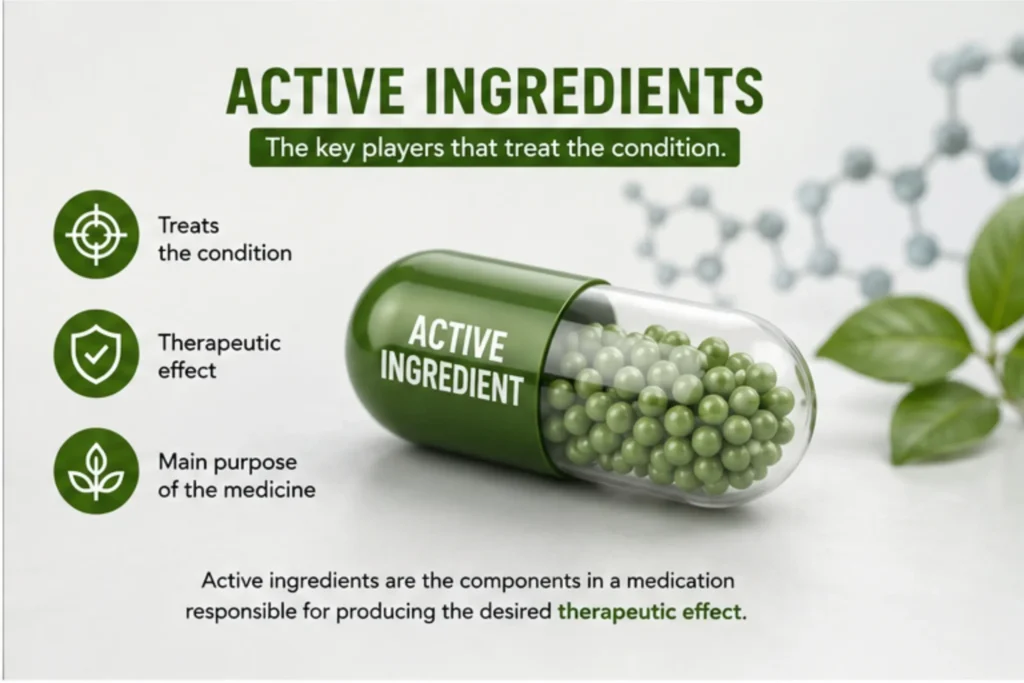
An active ingredient is the component of a medicine responsible for producing the intended pharmacological or therapeutic effect. It’s this substance that treats, relieves, or manages the condition a product is designed for — whether that’s pain, infection, acidity, or inflammation. In regulatory and technical terms, this substance is called the Active Pharmaceutical Ingredient (API).
An API is the biologically active core of a formulation. Before it becomes part of a finished medicine, an API is manufactured, tested, and characterised separately, and then combined with other ingredients to create a usable product such as a tablet, capsule, syrup, or injection. A single formulation may contain one active ingredient, or a combination of two or more, depending on how the product is designed to work.
For example, in certain pain-relief formulations, Paracetamol may be present as the active ingredient responsible for reducing fever and easing mild pain. In certain antibiotic formulations, Amoxicillin may be present as the active ingredient responsible for fighting bacterial infection. These examples are meant only to illustrate what an active ingredient is — they are not a recommendation for use, and no medicine should be chosen based on this article alone. A qualified healthcare professional should always guide treatment decisions.
What Are Inactive Ingredients?
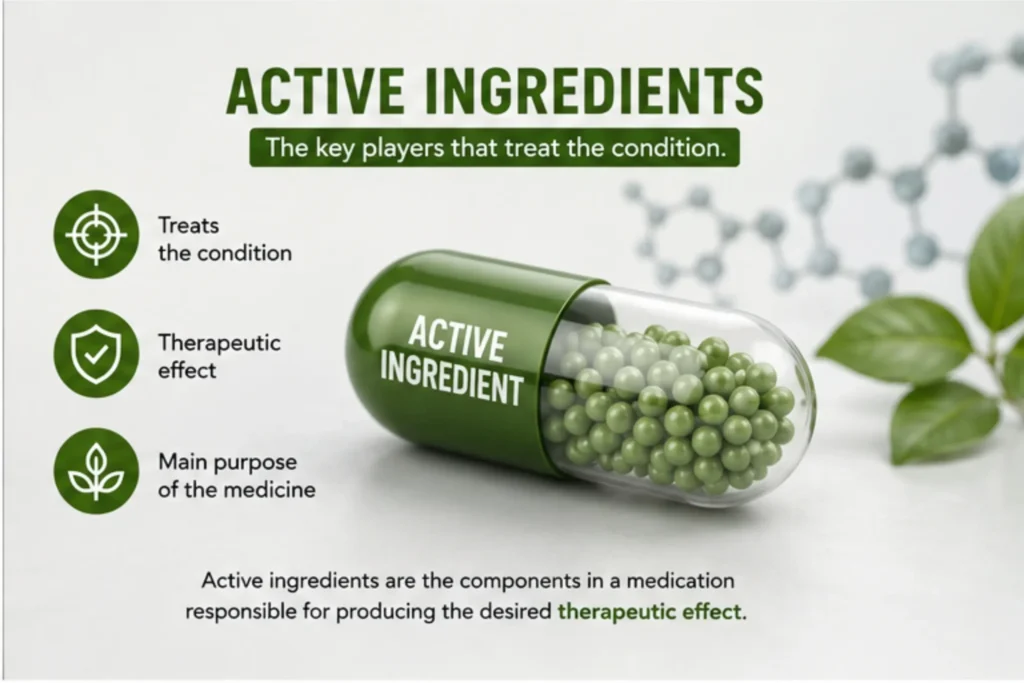
Inactive ingredients — commonly known as excipients — are the other substances present in a pharmaceutical formulation. They’re not intended to provide the primary therapeutic effect, but that doesn’t mean they’re unimportant. In fact, most finished medicines contain more excipient material by weight than active ingredient.
Excipients play several practical roles in how a medicine is made and used:
- Helping powders bind together to form a stable tablet
- Improving flow properties during large-scale manufacturing
- Protecting the active ingredient from moisture, light, or temperature
- Improving taste, smell, or appearance for patient acceptability
- Controlling how quickly a tablet or capsule breaks down (disintegration)
- Supporting the controlled release and delivery of the active ingredient
- Maintaining consistency from one manufacturing batch to the next
Put simply, “inactive” describes an ingredient’s role in producing the medicine’s primary therapeutic action — not its overall importance to the formulation. A well-chosen excipient can be the difference between a product that performs reliably and one that doesn’t.
Active vs Inactive Ingredients: Key Differences
| Feature | Active Ingredient | Inactive Ingredient |
|---|---|---|
| Purpose | Produces the intended therapeutic/pharmacological effect | Supports formulation, stability, manufacturing, delivery, appearance, or usability |
| Other Name | API / Active Pharmaceutical Ingredient | Excipient |
| Therapeutic Role | Primary therapeutic effect | Generally not intended to provide the primary therapeutic effect |
| Examples | Paracetamol, Amoxicillin, Cetirizine | Microcrystalline cellulose, Magnesium stearate, Lactose |
| Importance | Essential to the medicine’s intended pharmacological action | Important for formulation quality and product performance |
Common Examples of Active Pharmaceutical Ingredients
The exact API used depends entirely on the formulation and the condition it’s designed for. A few widely recognised examples include:
- Paracetamol — used as the active ingredient in certain formulations intended for fever and mild pain
- Ibuprofen — used as the active ingredient in certain anti-inflammatory pain-relief formulations
- Amoxicillin — used as the active ingredient in certain penicillin-class antibiotic formulations
- Cetirizine — used as the active ingredient in certain antihistamine formulations for allergy relief
- Pantoprazole — used as the active ingredient in certain proton pump inhibitor formulations for acid-related conditions (you can read more in our comparison of Pantoprazole vs Rabeprazole)
These are general examples meant to explain the concept of an API. They are not suitable for every person or medical condition, and this article does not provide dosing guidance for any of them.
Common Examples of Inactive Ingredients
The excipients used in a formulation vary widely depending on the product, dosage form, and manufacturer. Commonly used inactive ingredients include:
- Lactose — a filler or diluent used to add bulk to tablets
- Microcrystalline cellulose — a binder that provides structure and compressibility
- Starch — used as a binder or disintegrant
- Magnesium stearate — a lubricant that prevents ingredients from sticking during tablet compression
- Povidone — a binder that helps hold granules together
- Talc — a glidant that improves powder flow during manufacturing
- Silicon dioxide — used to prevent caking and improve flow
- Certain approved colours — used for product identification and differentiation
- Flavouring agents — commonly used in syrups and chewable formulations
- Preservatives — used in some liquid formulations to maintain product integrity
Not every medicine contains all of these ingredients, and the exact excipients depend on the specific formulation.
Why Are Inactive Ingredients Important in Medicines?
Excipients contribute to a medicine’s overall performance in several practical ways:
- Supporting tablet manufacturing and shaping
- Binding powders together for a stable, intact tablet
- Improving flow properties during production
- Enhancing product stability over its shelf life
- Aiding preservation, particularly in liquid formulations
- Improving taste and palatability, especially for children
- Contributing to appearance and easy identification
- Controlling tablet disintegration and dissolution
- Supporting effective delivery of the active ingredient
- Maintaining consistency between manufacturing batches
Do Inactive Ingredients Affect Medicine Safety?
Most excipients are selected carefully for a specific formulation purpose, and regulatory frameworks require that all ingredients in a medicine — active and inactive — be identified and assessed. That said, it would not be accurate to say inactive ingredients are always completely harmless to everyone. Some individuals may have sensitivities or allergies to particular ingredients, such as certain colours, preservatives, or fillers, and some excipients may be relevant to people with specific dietary or medical considerations, such as lactose intolerance.
The ingredient list or package information on a product can help identify its full composition. If you have concerns about a specific ingredient in a medicine you’re using, the most reliable step is to consult a qualified healthcare professional or pharmacist, who can review the product’s full composition against your individual situation.
Why Can Two Medicines With the Same Active Ingredient Have Different Inactive Ingredients?
It’s common to see two medicines from different manufacturers containing the same active ingredient but a different list of excipients. This happens because formulation is a design process, not a fixed formula. Manufacturers make choices based on their own formulation approach, the specific dosage form being produced, the manufacturing process available to them, stability requirements for their product, and considerations like taste, appearance, and packaging.
Because of this, two products built around the same API are not necessarily identical in every formulation characteristic, even though they share the same primary therapeutic ingredient.
Active and Inactive Ingredients in Different Dosage Forms
The role and type of excipients used can vary significantly depending on the dosage form. In tablets, excipients typically include binders, fillers, lubricants, and disintegrants that help the tablet form and break down correctly. Capsules rely on shell materials and fillers suited to encapsulation, while syrups and suspensions use sweeteners, flavouring agents, and preservatives to maintain taste and stability in liquid form.
Creams and ointments depend on bases and emulsifiers that determine texture and skin absorption, injections require sterile solvents and stabilisers suited for direct administration, and eye drops need sterility-focused excipients formulated specifically for ocular safety. In every case, excipients are chosen to match the specific demands of that dosage form and its intended route of use.
How Pharmaceutical Manufacturers Select Ingredients
Formulation teams weigh multiple factors before finalising a product’s composition, including the stability of the active ingredient, its compatibility with candidate excipients, the intended dosage form, the manufacturing process, storage requirements, and applicable regulatory and quality standards. At its core, ingredient selection balances therapeutic performance, manufacturability, and patient usability.
Why Understanding Medicine Composition Matters
Knowing the difference between active and inactive ingredients gives patients, pharmacists, and industry professionals a more complete picture of the products they use, sell, or recommend. It can help readers understand what’s printed on a medicine label, have more informed conversations with a pharmacist about ingredient-related concerns, identify potential sensitivities before they become a problem, and better understand why formulations from different manufacturers can differ even when they share the same API. This concept sits alongside other foundational distinctions in pharmacology, such as the difference between a drug and a medicine, which also helps clarify how a raw substance becomes a finished, patient-ready product. None of this information is meant to encourage self-diagnosis or changing a medication without professional guidance.
Active Ingredients, APIs and Pharmaceutical Manufacturing
API quality sits at the foundation of every reliable medicine. From there, formulation science determines how that API is combined with excipients, quality control and quality assurance processes verify that each batch meets its specifications, and Good Manufacturing Practice (GMP) protocols ensure that production is consistent, traceable, and compliant with regulatory expectations. Batch-to-batch consistency — in both the active ingredient and the excipients around it — is what allows a medicine to perform the same way every time a patient uses it.
How Rosette Pharma Approaches Pharmaceutical Product Quality
Rosette Pharma has been operating in the pharmaceutical industry since 2006, offering a wide range of formulations across dosage forms including tablets, capsules, syrups, injectables, ointments, softgel capsules, and drops. As part of its PCD Pharma Franchise and third-party manufacturing model, Rosette Pharma sources its products from WHO-GMP–compliant manufacturing facilities and offers a DCGI-approved product portfolio. For franchise partners, distributors, and pharma entrepreneurs, this combination of API sourcing discipline and formulation consistency is what supports reliable, repeatable product performance across the portfolio.
Frequently Asked Questions
What is an active ingredient in medicine?
An active ingredient is the substance in a medicine responsible for producing its intended therapeutic or pharmacological effect.
What are inactive ingredients?
Inactive ingredients are the other substances in a formulation that are not intended to provide the primary therapeutic effect, but instead support manufacturing, stability, delivery, or usability.
Are inactive ingredients the same as excipients?
Yes. “Inactive ingredient” and “excipient” are generally used interchangeably in pharmaceutical formulations.
What is an API in pharmaceuticals?
API stands for Active Pharmaceutical Ingredient — the biologically active substance responsible for a medicine’s intended effect.
Why are inactive ingredients added to medicines?
They’re added to help with manufacturing, stability, preservation, taste, appearance, disintegration, and delivery of the active ingredient.
Can two medicines with the same active ingredient have different inactive ingredients?
Yes. Different manufacturers may choose different excipients based on their formulation design, dosage form, and manufacturing process.
Can inactive ingredients cause allergies or sensitivities?
In some individuals, yes. Certain excipients such as specific colours, preservatives, or fillers may cause sensitivities in people with particular allergies or dietary considerations. A pharmacist or doctor can help assess this.
Where can I find the active and inactive ingredients of a medicine?
These are typically listed on the product’s packaging, package insert, or label. A pharmacist can also help identify a product’s full composition.
Conclusion
The core difference between active and inactive ingredients comes down to role: active ingredients are responsible for a medicine’s intended primary therapeutic or pharmacological effect, while inactive ingredients support the formulation, manufacturing, stability, delivery, appearance, or overall usability of the product. Both categories matter. A medicine’s effectiveness depends on its API, but its reliability, consistency, and usability depend just as much on the excipients built around it. Understanding this distinction helps patients, pharmacists, and pharmaceutical industry professionals alike engage more confidently with the products they use, prescribe, or bring to market.


