
Medically reviewed for factual accuracy. This article is for general educational purposes only and is not a substitute for professional medical advice. Always consult a qualified doctor or pharmacist before starting, stopping, or changing any medication.
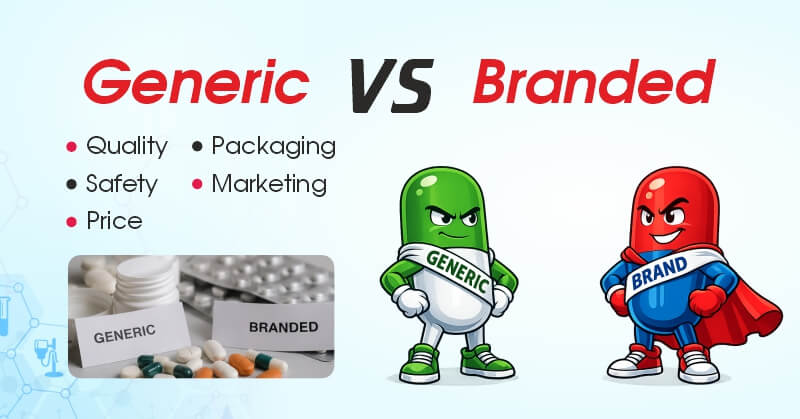
If you have ever stood at a pharmacy counter and been asked, “Do you want the branded one or the generic one?” — you are not alone. Millions of Indians face this exact question every day, and most walk away a little confused.
Is the cheaper option actually safe? Does the expensive one work better? Are they even the same medicine?
This guide answers all of that in plain language. We will walk through what generic and branded medicines actually are, how India regulates both, why prices differ so much, and how to make an informed choice — always in consultation with your doctor or pharmacist.
Table of Contents
- What Are Generic Medicines?
- What Are Branded Medicines?
- Generic Medicines vs Branded Medicines: Key Differences
- Are Generic Medicines as Effective as Branded Medicines?
- Why Are Generic Medicines Usually Cheaper?
- How Medicine Quality Is Ensured in India
- Manufacturing Process: Do Generic and Branded Medicines Differ?
- Common Myths About Generic Medicines
- Advantages of Generic Medicines
- Advantages of Branded Medicines
- How to Choose the Right Medicine
- Role of Reliable Pharmaceutical Manufacturers
- Why Choose Rosette Pharma
- Frequently Asked Questions
- Conclusion
What Are Generic Medicines? {#what-are-generic-medicines}
A generic medicine contains the same active pharmaceutical ingredient (API), in the same strength and dosage form, as an already-approved branded (innovator) medicine. It is manufactured and sold once the original patent on that molecule has expired, which allows other pharmaceutical companies to legally produce it.
The Active Pharmaceutical Ingredient (API)
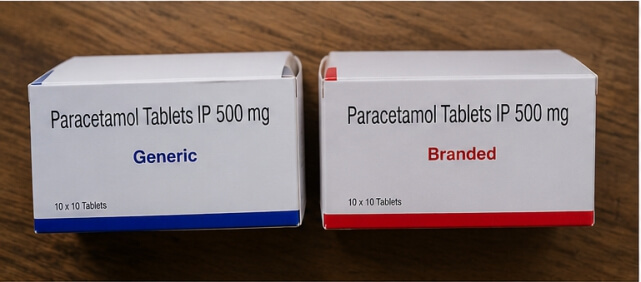
Every medicine, whether branded or generic, works because of its API — the actual chemical compound responsible for the therapeutic effect. For example, paracetamol is the API in many fever and pain-relief products, regardless of what brand name appears on the box.
A generic version of a medicine uses the identical API, at the identical strength, and is intended for the identical route of administration (oral, topical, injectable, and so on) as the reference branded product.
The Approval Process
In India, generic medicines are not approved casually. Manufacturers must apply to the Central Drugs Standard Control Organisation (CDSCO), typically through Form 44 under the Drugs and Cosmetics Act, 1940, and the New Drugs and Clinical Trials Rules, 2019. The application must include manufacturing details, quality control data, stability data, and — in most cases — bioequivalence data comparing the generic to the reference product.
Bioequivalence: The Core Requirement
Bioequivalence testing checks whether a generic drug releases its active ingredient into the bloodstream at a rate and extent that is comparable to the branded reference product. Regulatory guidance generally requires the relevant pharmacokinetic parameters of the test and reference products to fall within an accepted statistical range of one another. This is the scientific mechanism that allows regulators to conclude a generic medicine should behave the same way in the body as its branded counterpart.
Examples of Generic Medicines
- Paracetamol tablets (generic version of a branded fever/pain reliever)
- Amoxicillin capsules (generic antibiotic)
- Metformin tablets (generic anti-diabetic)
- Omeprazole capsules (generic antacid/PPI)
When Are Generic Medicines Prescribed?
Doctors may prescribe generics for chronic, long-term conditions such as diabetes, hypertension, or thyroid disorders, where patients need medicines for years and cost adds up significantly. Government-run outlets such as Jan Aushadhi Kendras were set up specifically to widen access to affordable generic medicines across India, as outlined by the Department of Pharmaceuticals.
What Are Branded Medicines? {#what-are-branded-medicines}
A branded medicine is sold under a proprietary trade name created and marketed by a specific pharmaceutical company. Branded medicines fall into two broad categories:
- Innovator brands — the original medicine developed through research, clinical trials, and patent protection.
- Branded generics — extremely common in India, these contain an off-patent generic API but are sold under a distinctive company brand name, with the manufacturer’s own packaging, quality assurance process, and marketing.
Brand Ownership
The company that develops or markets a branded medicine owns the trademark. This is why the same molecule — say, paracetamol — can appear on pharmacy shelves under dozens of different brand names, each produced by a different manufacturer.
Research & Development
True innovator brands go through years of laboratory research, animal studies, and multi-phase human clinical trials before they reach the market. This process is expensive and is a major reason innovator medicines command a premium price during their patent period.
Branded generics, on the other hand, do not repeat this original discovery research since the molecule is already established and off-patent. Their investment instead goes into formulation refinement, quality systems, and brand building.
Marketing and Packaging
Branded medicines typically invest in recognisable packaging, consistent visual identity, and awareness campaigns aimed at both doctors and patients. This is one reason many doctors and patients feel more familiar with a specific brand name.
Prescription Practices
In India, many doctors write prescriptions using brand names rather than generic (chemical) names, largely out of familiarity, consistent past clinical experience, and trust in a manufacturer’s established quality track record. The Medical Council norms have periodically encouraged prescribing by generic name, but brand-name prescribing remains widespread practice across the country.
Generic Medicines vs Branded Medicines: Key Differences {#key-differences}
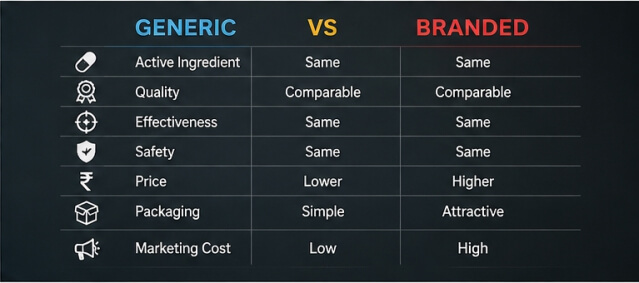
| Parameter | Generic Medicines | Branded Medicines |
|---|---|---|
| Meaning | Off-patent medicine sold under its chemical/generic name or a manufacturer’s own brand, after patent expiry | Medicine sold under a specific trademarked brand name |
| Active Ingredient | Same API, strength, and dosage form as the reference product | Original API (innovator) or same off-patent API (branded generic) |
| Effectiveness | Expected to be therapeutically comparable when approved via bioequivalence standards | Established clinical performance; branded generics rely on the same underlying molecule |
| Safety | Must meet CDSCO safety and quality standards before approval | Must meet the same CDSCO safety and quality standards |
| Quality Standards | Regulated under Drugs and Cosmetics Act, 1940 and Schedule M (GMP) | Regulated under the same Act and Schedule M (GMP) |
| Manufacturing Process | Same GMP-compliant process expected industry-wide | Same GMP-compliant process expected industry-wide |
| Packaging | Often simpler, cost-efficient packaging | Usually more elaborate branding, colours, and patient literature |
| Pricing | Generally lower, due to reduced R&D and marketing costs | Generally higher, reflecting R&D, marketing, and brand investment |
| Availability | Widely available, including through Jan Aushadhi stores | Widely available across retail pharmacies |
| Prescription Preference | Increasingly promoted by public health policy for affordability | Still the more common prescribing habit among many practitioners |
| Patient Perception | Sometimes wrongly perceived as “lower quality” | Often perceived as more trustworthy, rightly or wrongly |
| Regulatory Approval | DCGI/CDSCO approval with bioequivalence data | DCGI/CDSCO approval; innovator brands additionally require full clinical trial data |
| Shelf Life | Determined by manufacturer’s own stability testing, as per regulatory norms | Determined by manufacturer’s own stability testing, as per regulatory norms |
Key takeaway: Both categories of medicine sold legally in India must clear the same regulatory quality bar. The core differences lie in branding, marketing investment, pricing, and — for true innovator drugs — the original research investment, not in the fundamental legal quality requirement.
Are Generic Medicines as Effective as Branded Medicines? {#effectiveness}
This is the single most common question patients ask, and it deserves a clear, honest answer.
Same Active Ingredient, Same Dosage Strength
By regulatory definition, an approved generic medicine must contain the same active ingredient, in the same strength, and in a comparable dosage form as its reference branded product. This is not optional — it is a precondition for approval.
Bioequivalence Requirements
As explained earlier, bioequivalence studies are designed specifically to demonstrate that a generic version behaves comparably in the human body — how quickly and how completely the active ingredient is absorbed into the bloodstream. When these standards are met, regulators accept that the generic version should deliver a comparable therapeutic effect.
Therapeutic Effect
For the vast majority of prescribed molecules, once bioequivalence and quality standards are met, patients can generally expect the treatment effect of a generic version to match that of the branded product. This is the entire regulatory logic behind allowing generic substitution in health systems worldwide, including guidance published by the World Health Organization.
Quality Testing and Regulatory Oversight
Every batch of medicine — generic or branded — manufactured in a licensed Indian facility is expected to undergo quality control testing: raw material testing, in-process checks, and finished-product testing, before it can be released to the market. CDSCO and State Drug Controllers oversee this process through licensing, inspections, and post-market surveillance.
Important note: Individual patient response can still vary due to factors like excipients (inactive ingredients), formulation differences within accepted limits, or a patient’s own physiology. This is true across both branded and generic products, and is one of several reasons a doctor’s guidance matters when switching between products — particularly for narrow therapeutic index drugs where a physician may prefer consistency.
Why Are Generic Medicines Usually Cheaper? {#why-cheaper}
The price gap between generic and branded medicines is real, and it comes down to structural cost differences rather than a difference in the ingredient itself.
1. Lower Research Costs
Innovator drug development involves years of laboratory research, pre-clinical studies, and multi-phase human trials — often the single largest cost in a medicine’s price. Generic manufacturers do not repeat this discovery process because the molecule is already scientifically established.
2. No Repeated Clinical Development
Instead of full clinical trials, generic approval relies primarily on bioequivalence and quality data, which is a far less expensive and time-consuming regulatory pathway.
3. Lower Marketing Expenses
Large-scale doctor engagement programmes, patient awareness campaigns, and premium packaging all add to a branded product’s cost structure. Generic manufacturers typically spend far less in this area.
4. Competition
Once a molecule goes off-patent, multiple manufacturers can produce it. This competition naturally pushes prices down — a basic market dynamic that benefits patients.
5. Manufacturing Efficiency
Established generic manufacturers often produce at scale across multiple product lines, spreading fixed costs and improving cost efficiency without compromising on regulatory quality requirements.
Expert Tip: A lower price does not automatically mean lower quality — it typically reflects a different cost structure. Always verify that any medicine, generic or branded, is purchased from a licensed pharmacy and carries proper batch and expiry details.
How Medicine Quality Is Ensured in India {#quality-assurance}
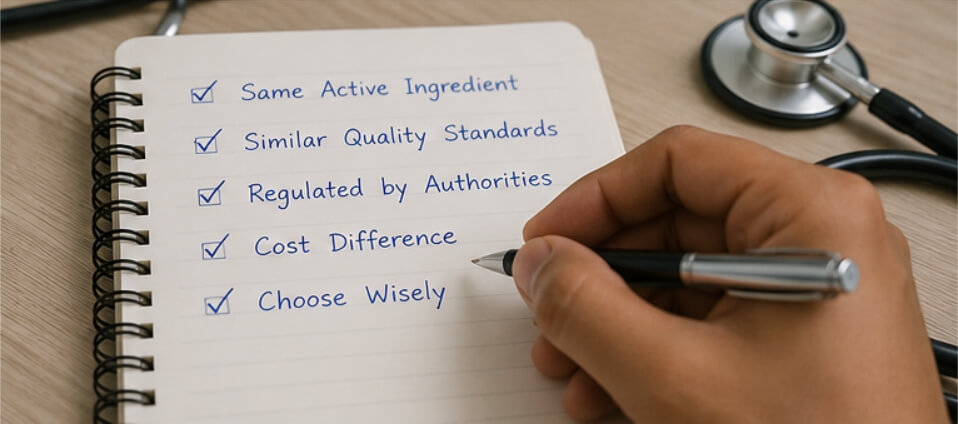
India has a multi-layered regulatory system designed to ensure that every legally sold medicine — regardless of brand — meets defined quality, safety, and efficacy benchmarks.
CDSCO (Central Drugs Standard Control Organisation)
CDSCO functions as India’s national regulatory authority for pharmaceuticals, operating under the Ministry of Health & Family Welfare. It sets standards, approves new drugs, and coordinates with State Drug Controllers on enforcement. You can review CDSCO’s official guidance at cdsco.gov.in.
DCGI (Drugs Controller General of India)
The DCGI heads CDSCO and is the licensing authority for new drug approvals, clinical trial permissions, and certain categories of import/export licences. A “DCGI-approved” product is one that has cleared this central regulatory review.
GMP and Schedule M
Good Manufacturing Practice (GMP) requirements are laid out under Schedule M of the Drugs and Cosmetics Act, 1940. These cover facility design, equipment qualification, hygiene, documentation, and process control — the operational backbone of consistent medicine quality.
WHO-GMP
WHO-GMP certification benchmarks a facility against World Health Organization manufacturing guidelines, which are widely recognised internationally and often required for export to regulated markets. Many Indian manufacturers pursue WHO-GMP certification as a mark of manufacturing discipline, in addition to domestic Schedule M compliance.
Quality Control and Batch Testing
Licensed manufacturers are expected to test raw materials on arrival, monitor critical parameters during production, and test every finished batch before release — covering parameters such as identity, potency, dissolution, and microbial limits, depending on the product type.
Stability Testing
Stability studies determine how a medicine performs over time under specified storage conditions, which is how a manufacturer establishes and justifies a product’s shelf life and expiry date.
Packaging Standards
Approved packaging must clearly display batch number, manufacturing date, expiry date, manufacturer details, and — for prescription medicines — appropriate regulatory symbols (such as the Schedule H marking), helping pharmacists and patients verify authenticity.
For readers interested in the general terminology used in this space, our earlier explainer on the difference between drug and medicine is a useful companion read.
Manufacturing Process: Do Generic and Branded Medicines Differ? {#manufacturing}
A common misconception is that generic medicines are produced on some kind of “lesser” production line. In reality, the regulatory manufacturing requirements are identical — what differs is business strategy, not the underlying process obligations.
Raw Material Sourcing
Both generic and branded manufacturers are expected to source APIs and excipients from approved vendors and test them against defined specifications before use.
Formulation
Formulation involves combining the API with excipients (binders, fillers, preservatives, and so on) to create a stable, usable dosage form. Manufacturers may use different — but equally validated — excipients or formulation techniques while still delivering the same active ingredient at the same strength.
Manufacturing
Both categories are expected to be produced in Schedule M / GMP-compliant facilities, following validated manufacturing processes, whether the medicine will ultimately be sold as an innovator brand, a branded generic, or a generic product.
Quality Control
Batch-wise testing, documentation, and release protocols apply uniformly across licensed manufacturers, irrespective of whether the end product carries a well-known brand name or a generic label.
Packaging and Distribution
This is often where visible differences emerge — branded products may carry more elaborate cartons, inserts, and patient information leaflets, while generics may use simpler, functional packaging. Distribution channels can also differ: branded products often move through structured stockist-distributor-retailer networks with doctor engagement, while some generics are distributed through dedicated outlets like Jan Aushadhi Kendras alongside regular pharmacy channels.
Where they are genuinely similar: the regulatory manufacturing obligation, the API requirement, and the quality control expectation.
Where they can differ: formulation technique (within approved limits), packaging investment, and market positioning.
Common Myths About Generic Medicines {#myths}
Misinformation around generic medicines is widespread. Here are the most common myths, addressed with facts.
| Myth | Fact |
|---|---|
| Generic medicines are less effective | Approved generics must demonstrate bioequivalence to the reference product, meaning they are expected to work comparably for most patients |
| Generic medicines are lower quality | Generic manufacturers in India must follow the same Schedule M/GMP standards as any other licensed manufacturer |
| They work more slowly | Bioequivalence standards specifically evaluate the rate of absorption, not just the total amount absorbed, to rule out clinically meaningful timing differences |
| They are only for low-income patients | Generic medicines are used across all income groups worldwide, including in many developed healthcare systems, precisely because of their cost-effectiveness |
| Doctors never prescribe generics | Many doctors, especially in government hospitals and for chronic disease management, actively prescribe generic medicines |
| Generic medicines are unsafe | Generic medicines must clear the same CDSCO safety review process required for market approval |
| All generic medicines are identical in every respect | Generic versions from different manufacturers can vary slightly in excipients, coating, or appearance, while still meeting the same active ingredient and bioequivalence requirements |
| Generic medicines are “copied” illegally | Generic manufacturing is entirely legal once the original patent has expired — this is a standard, government-regulated pathway in pharmaceutical systems globally |
| Branded medicines never have side effects while generics do | Side effect profiles are primarily linked to the active ingredient itself, which is the same in both categories |
| Cheaper always means fake | Price differences reflect R&D, marketing, and brand investment — not necessarily counterfeit status. Always verify authenticity through licensed pharmacies regardless of price |
Advantages of Generic Medicines {#generic-advantages}
- Cost savings: Significantly lower out-of-pocket expense, especially valuable for chronic, long-duration treatment.
- Wider accessibility: Affordable pricing helps extend treatment access to a larger population, including through initiatives like Jan Aushadhi Kendras.
- Regulatory quality standards: Must meet the same CDSCO approval bar as any other legally sold medicine in India.
- Increased competition: Multiple manufacturers producing the same off-patent molecule can improve both pricing and supply availability.
- Better affordability for public health systems: Lower-cost generics support government and institutional procurement for large-scale healthcare delivery.
Advantages of Branded Medicines {#branded-advantages}
- Brand recognition: Long-standing brands offer consistency that many doctors and patients have come to trust over years of clinical experience.
- Product awareness: Sustained doctor and patient education efforts can improve understanding of correct usage and safety information.
- Marketing and support infrastructure: Established brands often invest in patient literature, doctor training, and after-sales support.
- Innovation (for true innovator brands): Original R&D-driven brands are responsible for bringing genuinely new molecules to market in the first place.
- Established manufacturing reputation: A recognised brand name can reflect a manufacturer’s long-term track record of consistent quality.
How to Choose the Right Medicine {#how-to-choose}
- Follow your doctor’s advice first. Only a qualified healthcare professional can assess your specific condition, medical history, and treatment needs.
- Buy from licensed pharmacies only. This is the single best safeguard against counterfeit or substandard products, regardless of brand or generic status.
- Check the expiry date every time, even for medicines you buy regularly.
- Verify packaging integrity — look for intact seals, clear batch numbers, and legible manufacturer information.
- Follow dosage instructions exactly as prescribed; do not adjust dose or frequency on your own.
- Never self-medicate, and never switch between a branded and generic version of a prescription medicine without first checking with your doctor or pharmacist, especially for chronic or critical conditions.
Important Note: This article does not recommend one category of medicine over another. The right choice depends on your specific medical condition, your doctor’s clinical judgement, and factors like cost and availability — always discussed directly with your healthcare provider.
Role of Reliable Pharmaceutical Manufacturers {#role-of-manufacturers}
Whether a medicine is sold as a generic or under a brand name, its real-world safety depends heavily on the manufacturer behind it. This is true for patients, and it is even more critical for pharmacy owners, distributors, and entrepreneurs building a pharma business.
Product Quality
A manufacturer’s internal quality culture — not just its certificates — determines whether every batch consistently meets specification.
Consistency
Reliable manufacturers maintain the same quality standard batch after batch, which matters enormously for chronic-therapy patients who depend on predictable treatment outcomes.
Regulatory Compliance
A trustworthy manufacturer maintains valid DCGI licensing, follows Schedule M/GMP norms, and keeps documentation audit-ready at all times.
Timely Supply
For pharmacy owners, distributors, and franchise partners, consistent, on-time supply is what keeps a business — and patient access to treatment — running smoothly.
Patient Confidence
Ultimately, all of the above builds the trust that keeps patients returning to a particular pharmacy or brand. For entrepreneurs evaluating manufacturing partners, our detailed guide on how to select a reliable pharma manufacturer walks through the exact criteria to check before signing on with any company.
Why Choose Rosette Pharma {#why-rosette-pharma}
If you are a distributor, pharmacy owner, medical representative, or entrepreneur evaluating pharmaceutical manufacturing or franchise partners, here is where Rosette Pharma fits into this picture.
Rosette Pharma is a pharmaceutical company established in 2006 and headquartered in Karnal, Haryana. The company’s product portfolio spans 500+ formulations across major therapeutic segments, manufactured through a WHO-GMP–compliant manufacturing network, with a DCGI-approved product portfolio.
Here’s what that means in practical terms:
- Third-party manufacturing: Rosette Pharma offers third-party manufacturing support for allopathic, derma, and herbal formulations, with quality-tested production from product development through to packaging. Learn more on the Rosette Pharma home page.
- PCD Pharma Franchise: Entrepreneurs and medical representatives can partner with Rosette Pharma through its PCD Pharma Franchise programme, which offers district-level monopoly rights, structured business support, and a defined product range.
- Multiple dosage forms: The company’s manufacturing network covers tablets, capsules, dry syrups, injectables, ointments, softgel capsules, syrups, sachets, and ear/eye/nasal drops, among other forms.
- Broad therapeutic coverage: Through its divisions — Rosette Pharmaceuticals, Admetus Pharma (orthopaedics and dermatology), Yeux Care (ophthalmic care), and Rosette Organics (herbal formulations) — the company addresses a wide range of therapeutic needs.
- Business support: Franchise and manufacturing partners receive structured onboarding and marketing support as part of the partnership model.
If you are exploring how to enter the pharmaceutical business altogether, our guide on how to start a pharmaceutical company breaks down licensing, investment, and compliance requirements step by step. And if you are ready to discuss a manufacturing or franchise partnership directly, you can reach the team through the Contact Us page.
This section describes Rosette Pharma’s stated business offerings for context. It does not constitute a comparative quality claim against other manufacturers, and patients should continue to rely on their doctor’s prescription for any specific medicine.
Frequently Asked Questions {#faqs}
1. What is the main difference between generic and branded medicines? The core difference lies in branding, marketing, and pricing. Both are expected to contain the same active ingredient at the same strength when they refer to the same molecule, and both must meet CDSCO’s regulatory quality standards before sale in India.
2. Are generic medicines as safe as branded medicines? Yes — generic medicines sold legally in India must clear the same CDSCO safety and quality approval process as any other licensed pharmaceutical product.
3. Why do generic medicines cost less than branded ones? Generic manufacturers avoid the cost of original drug discovery research and large-scale marketing, and they benefit from market competition once a molecule goes off-patent — all of which lowers the final price.
4. Do generic and branded medicines contain the same active ingredient? Yes, when referring to the same molecule, both contain the same active pharmaceutical ingredient at the same strength and dosage form. This is a regulatory requirement for generic approval.
5. Can I switch from a branded medicine to a generic version on my own? You should not switch without consulting your doctor or pharmacist first, especially for chronic conditions or narrow therapeutic index drugs, where your physician may have specific reasons for a particular product.
6. Who regulates medicine quality in India? The Central Drugs Standard Control Organisation (CDSCO), headed by the Drugs Controller General of India (DCGI), regulates medicine approval and quality standards at the national level, working alongside State Drug Controllers.
7. What does “DCGI-approved” mean? It means the product or the manufacturing licence has cleared review by India’s Drugs Controller General, the country’s top pharmaceutical regulatory authority.
8. What is bioequivalence, and why does it matter? Bioequivalence testing demonstrates that a generic medicine’s active ingredient is absorbed into the bloodstream at a comparable rate and extent to the reference branded product — the scientific basis for expecting a similar therapeutic effect.
9. Are generic medicines available at every pharmacy? Many retail pharmacies stock generic options, and dedicated outlets such as Jan Aushadhi Kendras specifically focus on affordable generic medicines. Availability can still vary by location and product.
10. Is it true that doctors don’t prescribe generic medicines? No. Many doctors, particularly in government and public health settings, do prescribe generic medicines, especially for chronic disease management.
11. What is WHO-GMP certification? WHO-GMP is a manufacturing quality benchmark based on World Health Organization Good Manufacturing Practice guidelines, reflecting adherence to internationally recognised production and quality control standards.
12. Do branded medicines undergo more testing than generics? True innovator brands undergo extensive original clinical trials before their first approval. Once a molecule is established and off-patent, both branded generics and generics are evaluated primarily through bioequivalence and quality data rather than repeating full clinical trials.
13. Can generic medicines look different from the branded version? Yes. Colour, shape, and certain inactive ingredients (excipients) can differ between manufacturers, while the active ingredient, strength, and intended therapeutic effect remain aligned with regulatory requirements.
14. Is a lower price a sign of poor quality? Not necessarily. Price differences typically reflect R&D and marketing cost structures rather than a difference in the core active ingredient or regulatory compliance. Always buy from licensed pharmacies to avoid counterfeit risk, regardless of price point.
15. What should I check before buying any medicine, generic or branded? Check that you are buying from a licensed pharmacy, verify the expiry date, inspect packaging integrity, and confirm the product matches what your doctor prescribed.
16. Are all generic medicines manufactured in India considered export-quality? Not automatically. Export to regulated markets typically requires additional certifications and inspections beyond domestic Schedule M compliance, such as WHO-GMP or specific importing-country approvals.
17. What is a “branded generic”? It is an off-patent generic medicine sold under a specific manufacturer’s trade name, rather than only by its chemical/generic name — a very common category in the Indian pharmaceutical market.
18. How can pharmacy owners or distributors verify a manufacturer’s credibility? Check for a valid DCGI drug manufacturing licence, WHO-GMP or Schedule M compliance, and request batch-wise quality documentation. Our detailed guide on selecting a reliable pharma manufacturer covers this in depth.
19. Does the government promote generic medicines in India? Yes, through initiatives such as Jan Aushadhi Kendras under the Department of Pharmaceuticals, aimed at improving affordable medicine access. More information is available at pharmaceuticals.gov.in and nhp.gov.in.
20. Should I ever choose a medicine without consulting a doctor? No. This article is for general educational purposes only. Always consult a qualified healthcare professional before starting, stopping, or switching any medication.
Conclusion {#conclusion}
Generic and branded medicines are not opposing categories in a quality contest — they are two routes to the same regulatory destination in India. Both must meet CDSCO’s safety, quality, and (for generics) bioequivalence requirements before they can legally reach a pharmacy shelf.
The real differences lie in research investment, marketing, packaging, and price — not in a mandated difference in therapeutic quality. Your choice between the two should always be guided by your doctor’s clinical advice, your specific health condition, and practical factors like cost and availability.
For patients, the safest approach is simple: buy from licensed pharmacies, follow your doctor’s prescription, and never hesitate to ask your pharmacist questions about the product you are being given.
For distributors, pharmacy owners, medical representatives, and entrepreneurs building a business in this space, the manufacturer you choose to partner with matters just as much as the category of medicine you sell. If you are exploring a PCD Pharma Franchise or need a reliable third-party manufacturing partner, Rosette Pharma’s team is available to discuss your requirements — reach out through the Contact Us page to start the conversation.


