
📖 In This Article
- 1What is it?
- 2Uses
- 3How it works
- 4Benefits
- 5Dosage & How to Apply
- 6Side Effects
- 7Precautions
- 8Storage Tips
- 9FAQs
A simple, doctor-reviewed guide for patients in India — everything you need to know before using Moxifloxacin eye drops.
Introduction
What Are Moxifloxacin Eye Drops?
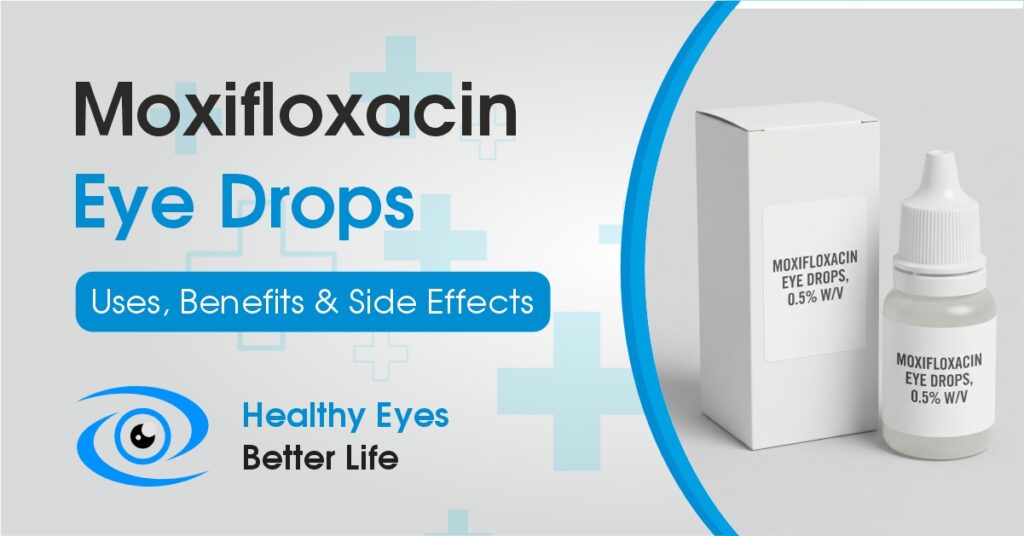
In simple words: Moxifloxacin eye drops are a powerful antibiotic medicine used to treat bacterial infections of the eye. They work quickly, are easy to use, and are available across India under various brand names.
Moxifloxacin belongs to a group of medicines called fluoroquinolone antibiotics. When applied as eye drops, the medicine directly targets and kills harmful bacteria in and around the eye, helping the infection clear up faster.
In India, you will commonly find this medicine under brand names such as Z-Mox, Moxiflox, Vigamox, Moxicip, Zymox, and many others. It is available at most pharmacies and is usually prescribed by an eye specialist (ophthalmologist) or a general physician.
⚠️
Important Note Always use Moxifloxacin eye drops only when prescribed by a qualified doctor. Do not self-medicate or share your prescription drops with others.
Medical Uses
What Is Moxifloxacin Used For?
Moxifloxacin eye drops are prescribed to treat several eye conditions caused by bacteria. Here are the most common uses:
| 👁️ Bacterial Conjunctivitis Commonly known as “pink eye” (aankh aana), this is the most frequent reason Moxifloxacin is prescribed. Reduces redness, discharge, and irritation. | 🔬 Corneal Ulcers Treats bacterial infections of the cornea (the clear front part of the eye), which can be serious if left untreated. |
| 🏥 Pre & Post Surgery Commonly used before and after eye surgeries like cataract operations to prevent bacterial infection. | 🦠 Blepharitis Treats bacterial infection of the eyelids (swelling, crust, and redness along the eyelid edges). |
| 💧 Keratitis Inflammation and infection of the cornea, often seen in people who wear contact lenses. | 🛡️ Endophthalmitis A serious bacterial infection inside the eye — used as part of treatment alongside other medicines. |
ℹ️
Remember Moxifloxacin ONLY works against bacterial infections. It will NOT work for viral eye infections (like those caused by the common cold virus) or allergic reactions. Using it unnecessarily can reduce its effectiveness over time.
Mechanism
How Does It Work?
Moxifloxacin works by targeting and blocking two essential enzymes that bacteria need to copy their DNA — DNA gyrase and topoisomerase IV. Without these enzymes, bacteria cannot reproduce and eventually die off.
Because the drops are applied directly to the eye, the medicine reaches very high concentrations exactly where it’s needed — in the eye tissue — with very little of the drug entering the rest of the body. This makes it both very effective and generally safe when used as directed.
It is also effective against a wide range of bacteria — including both gram-positive (like Staphylococcus) and gram-negative bacteria (like Haemophilus influenzae) — making it a broad-spectrum antibiotic.
Key Benefits
Benefits of Moxifloxacin Eye Drops
Doctors in India frequently recommend Moxifloxacin eye drops for a number of reasons. Here’s why they are considered one of the best choices for bacterial eye infections:
- ✓ Fast-Acting Relief — Most patients begin to notice improvement within 24–48 hours of starting treatment. Redness, discharge, and discomfort reduce quickly.
- ✓ Preservative-Free Formula — Unlike many older eye drops, Moxifloxacin (0.5%) is available without preservatives, making it much gentler on the eye surface. This is especially good for sensitive eyes.
- ✓ Broad-Spectrum Antibiotic — It is effective against a wide variety of bacteria, so doctors don’t always need to wait for a culture report before starting treatment.
- ✓ Simple Dosing Schedule — Usually 3 times a day (or as prescribed), which is easy to follow compared to older antibiotics that required every 2-hour dosing.
- ✓ Minimal Systemic Absorption — Very little of the drug enters the bloodstream, reducing the risk of side effects throughout the body.
- ✓ Safe for Post-Surgical Use — Widely used across India after cataract and LASIK surgeries to prevent infection, as it is well-tolerated by the eye.
- ✓ Reduces Antibiotic Resistance Risk (vs Older Drugs) — Works through two bacterial targets instead of one, making it harder for bacteria to develop resistance.
Dosage & Administration
How to Use Moxifloxacin Eye Drops
🧪 Standard Dosage
| Condition | Dosage | Duration |
|---|---|---|
| Bacterial Conjunctivitis (Mild) | 1 drop, 3 times/day | 5–7 days |
| Bacterial Conjunctivitis (Severe) | 1 drop, up to 4 times/day | 7 days |
| Corneal Ulcer | As directed by doctor (may be hourly initially) | As prescribed |
| Pre-Surgical Prevention | 1 drop, 4 times/day | 1–3 days before surgery |
| Post-Surgical Prevention | 1 drop, 4 times/day | As prescribed (usually 2–4 weeks) |
📋 Step-by-Step: How to Apply Correctly
- Wash your hands thoroughly with soap and water before touching the bottle or your eye.
- Gently tilt your head back and pull down the lower eyelid to create a small pocket.
- Hold the bottle above the eye and squeeze one drop into the pocket — do not let the tip touch your eye or eyelashes.
- Close your eye gently for 1–2 minutes. Do not blink rapidly.
- Press the inner corner of your eye (near the nose) gently — this is called punctal occlusion and helps prevent the drops from draining away too quickly.
- If you use more than one eye drop, wait at least 5 minutes before applying the next one.
- Replace the cap immediately after use and store the bottle as directed.
⏰
Missed a Dose? Apply it as soon as you remember. But if it’s almost time for your next dose, skip the missed one — don’t double up. Never use two drops to make up for a forgotten dose.
Safety Information
Side Effects of Moxifloxacin Eye Drops
Like all medicines, Moxifloxacin can cause side effects in some people. The good news is that most side effects are mild and go away on their own. Serious reactions are rare.
⚠️ Common (Mild) Side Effects
- Temporary burning or stinging after applying
- Eye irritation or discomfort
- Mild redness of the eye
- Blurred vision (temporary, clears within minutes)
- Watery eyes or increased tearing
- Eye dryness or a gritty feeling
- Headache (uncommon)
🚨 Serious Side Effects (Rare — Seek Help)
- Severe eye pain that doesn’t go away
- Sudden change in vision or vision loss
- Swelling of the face, lips, or throat
- Skin rash, itching all over the body
- Signs of new infection developing
- Extreme sensitivity to light
- Signs of allergic reaction
🚨
Stop immediately and see a doctor if: You develop a severe allergic reaction (swelling of face/throat, difficulty breathing, hives). This is rare but needs urgent medical attention.
Precautions & Warnings
Who Should Be Careful?
Before using Moxifloxacin eye drops, make sure your doctor knows about the following:
🤰 Pregnancy Safety during pregnancy is not fully established. Use only if clearly recommended by your doctor.
🍼 Breastfeeding Small amounts may pass into breast milk. Consult your doctor before using.
👶 Children Generally considered safe for children above 1 year of age. For infants, use only under doctor’s supervision.
👓 Contact Lenses Remove contact lenses before applying the drops. Wait at least 15 minutes before reinserting.
🚗 Driving Drops can temporarily blur your vision. Avoid driving immediately after applying.
💊 Allergies Tell your doctor if you are allergic to any fluoroquinolone medicine (like Ciprofloxacin, Levofloxacin).
🎭 Other Eye Conditions Inform your doctor if you have glaucoma, dry eye syndrome, or any other ongoing eye problem.
🧴 Other Eye Drops If using multiple eye drops, always wait 5–10 minutes between each one. Do not mix or use simultaneously.
Storage Tips
How to Store Moxifloxacin Eye Drops
- ✓ Store at room temperature — between 15°C and 25°C (keep away from direct sunlight and heat).
- ✓ Do not refrigerate (unless specifically mentioned on the label).
- ✓ Once opened, use within 4 weeks — even if the bottle is not empty. Discard after this period.
- ✓ Keep out of reach of children.
- ✓ Do not share your drops with anyone else — even if they have similar symptoms.
- ✓ Check the expiry date printed on the bottle before every use.
Common Questions
Frequently Asked Questions (FAQs)
Q. क्या Moxifloxacin eye drops बिना prescription के मिल सकती हैं? (Can I get them without a prescription?)
In India, Moxifloxacin eye drops are classified as prescription medicines (Schedule H). They should ideally only be purchased after consulting a doctor. Self-medicating with antibiotics can lead to antibiotic resistance and may worsen your condition if the infection is not bacterial.
Q. How long will it take to see improvement?
Most patients notice significant improvement in redness, discharge, and discomfort within 2–3 days. However, it is important to complete the full course of treatment even if you feel better, to prevent the infection from returning.
Q. Can I use these drops for a child with “aankh aana” (pink eye)?
Moxifloxacin is generally considered safe for children above 1 year of age for bacterial conjunctivitis. However, children’s eye infections should always be evaluated by a doctor first, as many cases of “aankh aana” are caused by viruses, for which antibiotics are not helpful.
Q. Can I wear contact lenses while using these drops?
No. You should remove your contact lenses before applying the drops and wait at least 15 minutes before putting them back in. Bacterial eye infections also generally require you to avoid contact lenses altogether during the treatment period.
Q. What should I do if I accidentally apply too many drops?
Using a few extra drops accidentally is usually not harmful. Gently rinse your eye with clean water and apply normal doses going forward. If you experience severe irritation or discomfort, contact your doctor.
Q. Is it safe to use during monsoon season when eye infections are common in India?
Yes, Moxifloxacin is commonly prescribed during the monsoon season when bacterial conjunctivitis is more prevalent in India. However, not all monsoon eye infections are bacterial — some are viral. Your doctor will determine the right treatment based on your symptoms.
Q. Can I use these drops in both eyes if only one is infected?
Follow your doctor’s instructions. If only one eye is prescribed, use only in that eye. However, doctors sometimes prescribe treatment for both eyes even if only one is visibly infected, to prevent spread. Use separate drop applicators or bottles if treating both eyes to avoid cross-contamination.
Summary
Key Takeaways
Moxifloxacin eye drops are a reliable, fast-acting, and widely used antibiotic treatment for bacterial eye infections across India. When used correctly — as prescribed by your doctor — they are safe and effective for conditions like bacterial conjunctivitis, corneal ulcers, and post-surgical care.
- ✓Use only as prescribed — don’t self-medicate.
- ✓Complete the full course, even if symptoms improve early.
- ✓Remove contact lenses before applying.
- ✓Store properly and discard within 4 weeks of opening.
- ✓See a doctor immediately if serious side effects occur.
💊
Have Questions About Your Eye Health? At Rosette Pharma, we are committed to bringing trusted, accurate medicine information to patients across India. Always consult your eye specialist or doctor for personalised advice.
⚡ Quick Facts
- Drug ClassFluoroquinolone Antibiotic
- Strength0.5% w/v
- Typical Dose1 drop, 3×/day
- Age Group1 year and above
- Prescription?Yes (Schedule H)
- Effect TimeNoticeable in 24–48 hrs
- Shelf Life (opened)4 weeks
- Preservative-Free?Yes (most brands)
⚕️ Medical Disclaimer
This article is for informational purposes only and is not a substitute for professional medical advice, diagnosis, or treatment. Always consult a qualified doctor or pharmacist before starting, stopping, or changing any medication.
Content by rosettepharma.com
📚 Related Articles
Trusted pharmaceutical information for patients across India.
rosettepharma.com | Privacy Policy | Contact Us
© 2025 Rosette Pharma. All rights reserved. For informational purposes only — not a substitute for professional medical advice.